Who Pays for Geography?

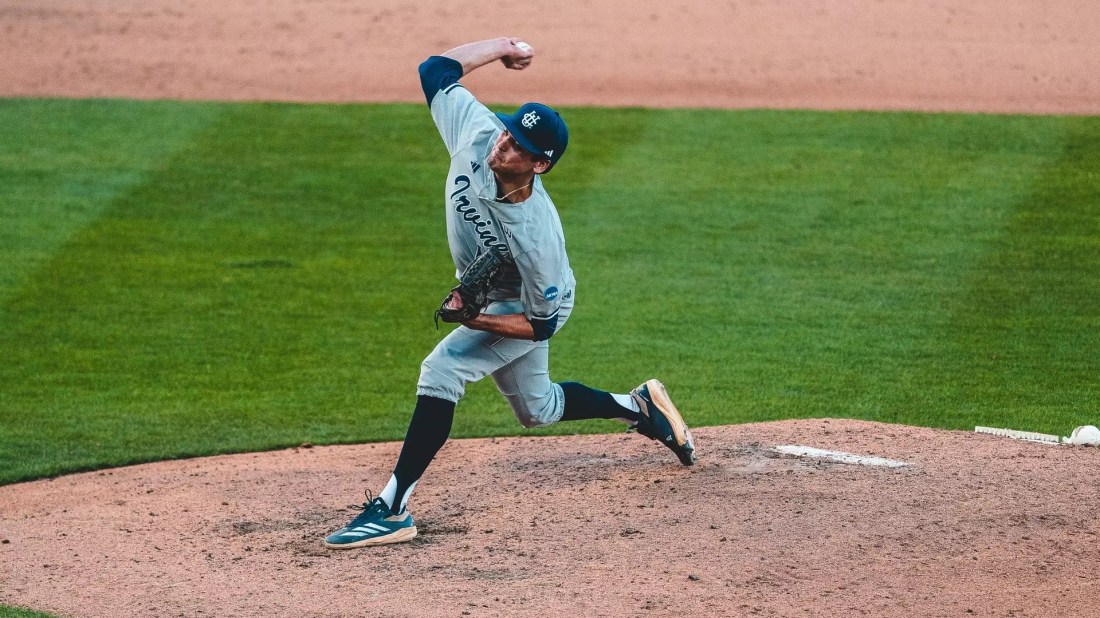
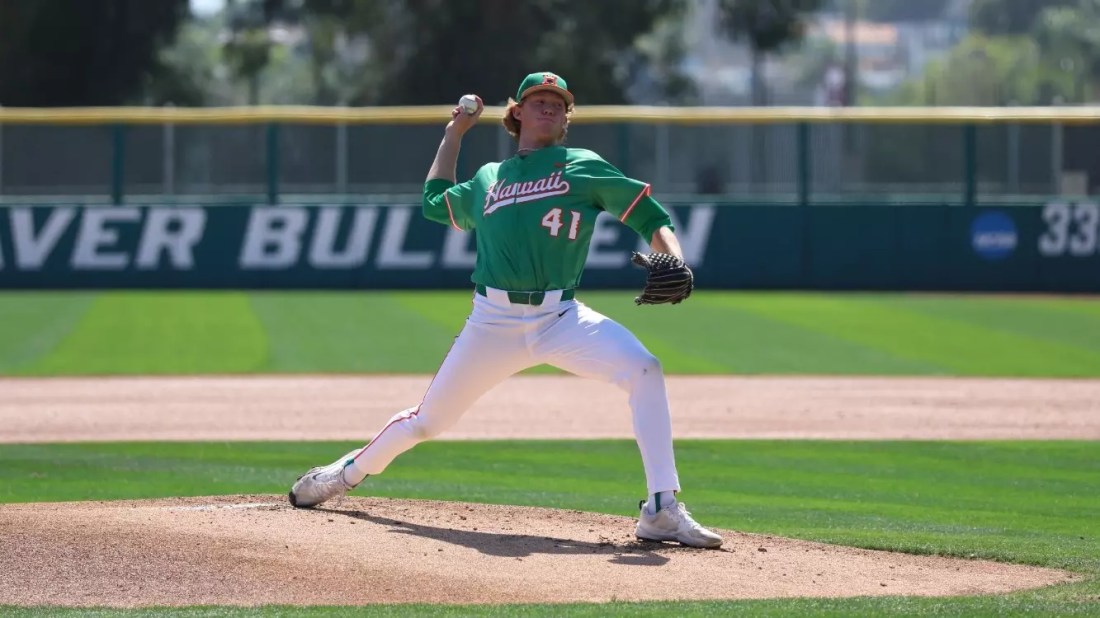
Fresno Pacific’s 2026 baseball schedule included a useful exercise in logistical efficiency. From March 27 through March 29, the Sunbirds played four games at Chaminade. On April 1 and 2, they played four more at Hawaii Pacific. Eight games in seven days, against two opponents on the same island. As ways to organize transpacific baseball travel go, the schedule made sense.

But efficiently organizing a trip is not the same thing as establishing that the trip is worth taking.

For Fresno Pacific and Menlo, that has resulted a conference-affiliation question. Both schools have moved from the Pacific West Conference to the California Collegiate Athletic Association for the 2026–27 academic year, bringing their baseball programs into the CCAA in spring 2027. Their announcements emphasize geography, travel demands, and institutional sustainability – considerations that sound almost quaint beside the media-rights calculations associated with major-conference Division 1 realignment.

This got me thinking.

Baseball is one of 10 Fresno Pacific sports moving into the CCAA. Whatever the advantages or disadvantages of a different baseball schedule, the university was evaluating a much larger package. When we see schools enter and leave Power 5 conferences, the motivations are easy to diagnose. But what would cause a D2 school to change a years-long affiliation?

If we take away the assumption that a conference’s most important function is delivering enormous television distributions, a more basic question emerges: What, exactly, is a conference worth?

A conference sells coordination

The easy answer is that Division I realignment follows money while Division II realignment follows geography. The better answer is that geography is money, and that different conferences face very different exchange rates.

Of course, there is media money here, too. In May 2024, the CCAA announced an exclusive, multiyear, seven-figure agreement with FloSports, with the revenue to be reinvested in member institutions. The conference is not operating outside the commercial sports economy. But it is obviously participating at a different scale from the Big Ten, whose seven-year agreement announced in 2022 was reported at more than $7 billion.

Those figures illuminate why the same additional travel expense might occupy very different places in their decision-making. A sufficiently large increase in media revenue can justify a substantial increase in operating costs. A smaller increase may not. There is nothing inherently irrational about either choosing a distant opponent or preferring a nearby one. The relevant question is what the institution receives in return.

Before a conference sells a single broadcast, however, it must solve a coordination problem.

A baseball program cannot produce its principal activity by itself. Its opponents are competitors in the standings but necessary partners in creating the games. A university can employ coaches, maintain a field, and recruit a roster, but without other institutions willing to arrive at an agreed time under agreed rules, it has purchased an unusually elaborate practice operation.

A conference helps turn those separate investments into a usable schedule. It reduces the work of repeatedly finding opponents and negotiating the terms of competition. Members accept obligations to one another because the resulting network provides something more valuable than a collection of individually convenient dates.

That is the bargain: some loss of flexibility in exchange for dependable competition.

But a dependable schedule can still be an expensive schedule. The value of the conference depends partly on how much it costs to fulfill those obligations, and on whether another conference offers a better combination of benefits and burdens.

For Fresno Pacific and Menlo, the CCAA offered a different answer to that calculation.

The cost is larger than the airfare

The Hawaii portion of Fresno Pacific’s schedule illustrates both the PacWest’s problem and an obvious way to manage it. Grouping two opponents into one stretch creates an economy of trip-building: more games can be attached to the substantial commitment of getting a team across the Pacific.

Menlo’s 2026 schedule used a similar arrangement, with eight games scheduled against Chaminade and Hawaii Pacific over five days. Seven were played; one was canceled. These were concentrated blocks of competition, not a succession of separate mainland-to-Hawaii trips.

The PacWest’s geography should not be confused with a failure to notice that airplanes are expensive.

The conference had already supplied plenty of California competition. Fresno Pacific hosted UH Hilo in 2026, rather than making a separate trip to the Big Island, and played mainland conference opponents including Menlo and Jessup. Three Hawaii members did not translate into three Hawaii trips for its baseball team that season.

The financial disclosures establish the scale of the spending affected by these scheduling choices, although they cannot isolate the savings.

In their 2025 Equity in Athletics Disclosure Act filings, Fresno Pacific reported approximately $1.74 million in game-day operating expenses, including $266,201 for baseball. Menlo reported approximately $1.33 million, including $198,899 for baseball.

These are neither total athletic-department budgets nor travel budgets. The reporting category includes transportation, lodging, and meals, but also equipment, uniforms, and officials. It would be incorrect to treat those figures as the amount available to be saved by changing conferences. They show the scale of contest-related operations, not the price of Hawaii.

Fresno Pacific does make a more specific claim about the expected benefit. Its transition FAQ forecasts significantly lower travel expenses and says that, in some sports, athletes could miss half as much class time under CCAA scheduling. The university does not provide the underlying calculation, and that forecast should not be converted into a verified result, or assumed to apply specifically to baseball.

Nevertheless, it identifies a cost that does not appear on an airline invoice.

Travel consumes student time, staff time, preparation time, and recovery time. A schedule can reduce the cost per game by keeping a team on the road longer while increasing other burdens. The cheapest itinerary for the business office is not automatically the least disruptive itinerary for the people taking it.

That is an opportunity-cost problem: time committed to one activity is unavailable for another. Its value does not disappear because the accounting system lacks a convenient line for it.

Nor does a financial benefit have to arrive as new revenue. Spending less to provide comparable competition can improve a department’s position just as surely as selling something new. The savings might support another athletic priority, reduce the subsidy required from the university, or simply provide protection against the next expense increase.

The department-wide perspective magnifies the issue. One baseball itinerary might be manageable. The relevant institutional question is what the conference’s geography requires across the entire collection of teams.

Institutional fit, but for what purpose?

Geography does not explain every dimension of affiliation. It does, however, help clarify what schools mean when they invoke the wonderfully elastic phrase “institutional fit.”

Fresno Pacific is a Christian university with Mennonite Brethren roots. The PacWest includes institutions such as Biola and Point Loma Nazarene, whose Christian identities are central to their own missions. On that dimension, FPU’s old conference provides some obvious peers.

Moving to a conference dominated by California public universities does not make those similarities disappear. It suggests that similarity of religious mission and usefulness as an athletic partner are different things.

FPU’s own FAQ anticipates the concern, affirming both its continuing Christian identity and its membership in the Council for Christian Colleges and Universities. Its athletic move does not require abandoning every other institutional relationship.

The economic interpretation is straightforward: a university does not need one network to perform every function.

It can collaborate with one set of institutions on religious or academic matters and another on organizing affordable competition. Requiring those groups to be identical may create a constraint without creating a corresponding benefit.

The CCAA is making a complementary choice.

The 12 institutions listed in its 2024 media-rights announcement were all California State University campuses. UC Merced began conference competition in 2025–26. Fresno Pacific and Menlo followed for 2026–27, with FPU becoming the league’s first private member since Grand Canyon’s departure in 2004. The conference is broadening its institutional composition while retaining its California footprint.

The CCAA was already geographically coherent. These additions do not rescue it from an incoherent map; they make the network denser and its membership more varied.

UC Merced’s explanation of its move into Division II is particularly revealing. In announcing NCAA acceptance, the university noted that nine Division II institutions were within 150 miles of campus, compared with only one NAIA institution. Moving into a different competitive classification could therefore bring it closer to a usable set of opponents, not farther away.

This is the potential advantage of economies of density. Another member can be especially useful when it sits near existing members and supplies teams in the sports they need. The benefit is not simply having a larger membership list. It is having more workable combinations of opponents, trips, and dates.

There are other possible benefits, too. Fresno Pacific explicitly places the move within its enrollment strategy. Menlo cites access to recruiting and alumni constituencies in California. These are broader institutional considerations than winning the next conference championship.

For a university evaluating athletics as part of student recruitment, the relevant return might include students who enroll or remain enrolled because of an athletic opportunity. That is not the same as saying every additional athlete is profitable: financial aid and the costs of educating and supporting that student belong in the calculation. But it explains why an athletic program’s institutional value cannot always be read from its ticket revenue.

None of this proves which benefit was decisive. It does suggest that “fit” should be interrogated rather than accepted as a complete explanation. Fit for recruiting? For controlling costs? For maintaining a religious identity? For competing in a particular sport?

Those questions can produce different lists of ideal partners.

There is also an important constraint on the whole exercise: a preferable conference must be willing to admit you. Menlo’s announcement described the CCAA opportunity as a “rare and time sensitive possibility.” The existence of nearby schools is not, by itself, an available conference invitation.

Someone still has to play Hawaii

The mainland perspective makes the appeal of regional realignment relatively easy to understand.

The Hawaii perspective makes it harder to treat that appeal as a complete solution.

Chaminade, Hawaii Pacific, and UH Hilo remain part of the PacWest’s competitive network. For them, mainland relationships are not merely an optional enhancement to an otherwise convenient schedule. They are central to the problem of assembling a conference around their location.

The strongest public evidence of that burden comes from UH Hilo.

In February 2025 legislative testimony, Hilo administrators said nearly 70 percent of their operating budget went toward travel-related costs, compared with approximately 20–25 percent for their continental peers. This was the university’s representation in support of a funding request, not an independently standardized comparison of athletic budgets. It nonetheless describes a dramatically different allocation of resources.

Later that year, the University of Hawaii reported that the state had made $500,000 in annual support for Hilo athletics permanent in its base budget, rather than requiring the funding to be requested each legislative session.

Here, the question in the headline becomes literal. Part of the cost of sustaining the institution’s athletic participation is being carried through recurring public support.

That does not establish whether the appropriation is too large, too small, or the optimal way to support athletics. It establishes that the cost of participation extends beyond a conference office choosing a clever schedule.

The underlying asymmetry is one of outside options.

A California school may have an opportunity to replace some transpacific competition with opponents elsewhere in California. A Hawaii school cannot obtain a nearby mainland by switching conferences. Even when both institutions value their relationship, their alternatives are not equally convenient.

That difference can create tension without either side behaving badly.

A mainland institution might reasonably conclude that another conference better serves its students and budget. Its Hawaii partners might reasonably regard reliable mainland membership as essential infrastructure. Both positions can be correct.

But there is an important complication: it does not follow that every mainland departure necessarily raises costs for the Hawaii schools that remain.

Hilo’s own testimony points in the opposite direction. It said recent PacWest expansion had increased the amount and duration of its travel, while additional conference championships created further expenses. More members had meant more obligations.

That is why conference economics cannot be reduced to “bigger is better.”

Adding a nearby opponent to an existing road trip might lower the average cost per game. Adding another required trip might increase the annual budget. A departure could eliminate an expensive obligation, remove a useful scheduling partner, or do some combination of both. The result depends on the schedule the remaining members construct.

A conference’s optimal size is not necessarily the largest number of schools willing to join. It is the membership and competition structure that supplies enough valuable games at an acceptable total cost.

The PacWest has long recognized the problem. An older strategic plan, with targets dating to the early 2010s, called for evaluating its geographic footprint, developing group purchasing arrangements for travel, and exploring scheduling pods. Those are not proof of its current arrangements, but they demonstrate that managing geography is a longstanding organizational task, not a newly discovered flaw.

The deeper issue is that the benefits of maintaining the network need not accrue to each member in proportion to its costs.

A school helps other members by being available to play them. Some of the value it creates therefore appears in theirschedules, not its own accounts. When it considers leaving, the institution has a strong reason to prioritize benefits to its students and budget rather than every benefit its membership provides to everyone else.

That is a network externality, not an indictment of the departing school.

It is also why an individually sensible move can leave a conference with a difficult collective problem. The institutions most able to choose a cheaper alternative may not be the ones most dependent on the existing arrangement.

None of the available evidence establishes that the PacWest’s Hawaii-mainland model is approaching collapse. It does explain why sustaining it requires more than observing that everyone would benefit from having a league.

Tennis makes the arrangement clearer

The most illuminating detail in these moves might belong to a sport other than baseball.

Fresno Pacific and Menlo are retaining PacWest affiliations for men’s and women’s tennis. Cal State LA and Stanislaus State also participate in PacWest women’s tennis. The CCAA does not sponsor tennis, so primary CCAA membership does not supply a complete conference home for those athletic departments.

This is not a contradiction. It is the logic of the moves in miniature.

The schools are not choosing between an organization that is universally useful and one that is universally defective. They are choosing among bundles of services and retaining a separate arrangement where the preferred bundle does not contain something they need.

In economic terms, they are unbundling.

Baseball can move with much of the department into a California-based conference. Tennis can remain in a network organized around a different collection of available programs. Other institutional relationships can continue independently.

This also limits the savings story. Joining the CCAA does not mean every team suddenly operates within one uniform travel footprint. The school-level result is the sum of several sport-level arrangements.

Conference affiliation looks tribal from the stands. From the business office, it can look considerably more modular.

The value of an ordinary game

There is a limit to what the public documents establish.

The transition announcements do not provide a complete before-and-after accounting of travel expenses, dues, entry costs, and media distributions. Without that comparison, it would be premature to assign a dollar value to either move or declare that the schools selected the financially optimal option

The CCAA’s own recent history also cautions against treating membership growth as a simple story of expanding opportunity. Sonoma State is scheduled to return to the conference in fall 2027 after a two-year athletics hiatus. Baseball is not among the sports in the announced return. A university’s return to conference competition and the restoration of its baseball program are not necessarily the same event.

That distinction should matter to baseball readers. Department-wide decisions create the conditions under which individual teams operate, but no sport is guaranteed to receive every benefit.

The useful lesson from Fresno Pacific and Menlo is therefore not that Division II has discovered a morally superior version of realignment. Nor is it that all-California conferences are inherently better than conferences that cross an ocean.

It is that a conference’s value includes something less conspicuous than its ability to sell a premium matchup: its ability to make an ordinary matchup workable.

At different revenue levels, universities can reach different conclusions about how much travel, expense, and disruption are worth accepting. The governing economic question remains the same: what does this relationship make possible, and what must each participant give up to sustain it?

For baseball, the most basic product is still two teams on the same field at the same time.

A conference does not have to deliver a television windfall to be valuable. Sometimes its most important contribution is making that ordinary game easier to keep playing.
The Astros Don’t Need a General Manager. They Need an Architect.

What I want from Houston’s next general manager, and why I wouldn’t limit the search to baseball.

In what is beginning to feel like an annual tradition, the Houston Astros are looking for a general manager. An 81–81 season and another postseason sweep have delivered us to another offseason of questions about who is in charge, what exactly they are in charge of, and how much longer this team can keep doing this.

I would prefer that our October traditions involve more baseball.

But here we are, and I find myself less interested in the vacancy than in what Jim Crane thinks filling it will accomplish. Does he want someone to finish assembling next year’s roster? Does he want a better negotiator, a more persuasive scout, someone who will find the missing outfielder without spending too much money?

Or does he recognize that the next good Astros team needs to be built, and that building it requires more than winning a few transactions?

I have followed this franchise my entire life. I have also spent roughly twenty years evaluating amateur and minor-league players, developing unreasonable attachments to some of them, and occasionally being rewarded for it. I am not approaching this as a dispassionate exercise in executive recruitment. I want Yordan Alvarez’s remaining prime to lead somewhere. I want to find out what Ethan Pecko and Bryce Mayer can become. I want the next interesting Astros prospect to arrive as an opportunity, not as the last available answer to an emergency.

There are still reasons to care about what comes next. Alvarez and Hunter Brown are players I would build around. Jeremy Peña and Isaac Paredes represent valuable choices. The commitments to Jose Altuve, Carlos Correa and Christian Walker, meanwhile, leave an expensive and complicated infield to sort through. This is neither a barren roster nor a particularly flexible one.

The farm presents the same tension. MLB Pipeline ranked Houston 29th, despite placing Kevin Alvarez and Xavier Neyens in its Top 100. I remain interested in Dana Brown’s draft classes. There is material worth developing. But liking individual prospects is not the same thing as trusting the organization to produce enough inexpensive major-league talent, at the right positions, at the right time.

That is the confidence I want back.

In my professional life, I spend a great deal of time thinking about how organizations evaluate people, allocate attention and translate good intentions into work that actually gets done. It has made me suspicious of hiring discussions that begin and end with whether a candidate is smart.

Of course the next general manager needs to be smart. The more consequential question is whether that person can make an entire organization smarter, and keep doing it after the introductory press conference.

Start with Matt Arnold.

Matt Arnold is the most straightforward place to begin.

Milwaukee won at least 92 games in each of his first three seasons running baseball operations. He now holds its president and GM titles. Its farm ranked third in that same Pipeline assessment.

That is the combination Houston needs, not one side of it purchased at the expense of the other.

I am not interested in hiring someone to win the prospect rankings while Alvarez gets older. Nor am I interested in endlessly liquidating tomorrow’s roster to keep today’s roster barely afloat. The goal is to replenish while competing: to make a difficult decision about a good player without treating it as a declaration that the season is over.

Milwaukee’s trades of Corbin Burnes and Devin Williams are useful examples of the sort of decisions Arnold has navigated. His contractual availability, however, is not publicly clear. Which brings us to the difficulty: the reasons Houston should want Arnold are also reasons Arnold might be perfectly happy where he is.

Crane cannot offer him the opportunity to run baseball operations as though nobody has thought to give him that responsibility. He already does. Houston would have to present a genuinely compelling proposition: greater resources, meaningful freedom to deploy them, and an owner prepared to support an organizational project rather than commission an annual roster repair.

And even then, we should resist the idea that Milwaukee’s success can be packed into one executive’s moving boxes.

The question is not merely whether Arnold knows what has worked. It is whether he could identify what Houston already does well, recruit what it lacks, and assemble a different version of a successful organization under different constraints. I would want to know which colleagues he would hope to bring, which functions he would prioritize, and what he would need Crane to stop doing.

Arnold is arguably the strongest candidate for this particular assignment. But the value of beginning with him is not that it gives us a favorite. It forces us to describe an attractive job. If the best-qualified person would look at the opening and ask why he should expose himself to it when he has a perfectly good alternative already on his paycheck, the opening needs work.

We should probably settle who gets to run the team

This is where Jeff Bagwell enters the discussion, and where being a lifelong Astros fan makes the conversation more uncomfortable, rather than less. I do not enjoy treating Bagwell’s presence as a problem. I also do not think loving a former player obligates me to endorse an ambiguous role in the organization’s decision-making.

Reporting has raised concerns among rival executives about a successor’s autonomy alongside Bagwell. Brown, for his part, has publicly defended Bagwell’s advice. Those accounts should both be acknowledged. The issue does not require us to believe that Bagwell secretly authored every transaction we dislike. It requires us to understand the difference between advice and authority.

A good executive should seek opinions from people who see the game differently. I would be concerned by a general manager who had no use for Bagwell’s perspective. But if a decision can travel around the person accountable for it and reach the owner through a separate channel, then the formal decision-making process is optional.

Eventually, employees learn which process matters.

That is not an argument against dissent. It is an argument for making dissent part of the process rather than a way to escape it.

It also explains why I keep returning to a president of baseball operations/general manager structure. I am not particularly interested in awarding somebody a more impressive title. I am interested in giving the organization enough leadership capacity to operate on more than one timescale.

A president could own the long-term strategy, departmental leadership, staffing, and development infrastructure, while a GM held substantial delegated authority over roster management and transactions. They would work together, disagree with each other and remain accountable for the whole operation. The division cannot be “one person has ideas, the other person knows baseball.”

Nor should every transaction require two approvals and an informal consultation with ownership. Adding hierarchy without clarifying decisions would make the problem worse.

There is already knowledge worth preserving. Charles Cook has a solid player-evaluation background; Gavin Dickey oversees development and personnel; Connor Huff has worked across business and baseball strategy. The incoming leader’s first task should not be to establish credibility by replacing everyone. It should be to determine where good work is happening, where it is being obstructed, and what the staff needs to do more of it.

Crane would still establish the budget and the organization’s objectives. He would still evaluate the executive he hired. But he would have to decide whether he wants someone responsible for baseball decisions or someone responsible for defending decisions made elsewhere.

No candidate can solve that distinction for him.

The next builder may already be an assistant

I do not want this to become an argument that experience inside a baseball front office is somehow a disqualification. That would be as silly as insisting that it is the only qualification. My concern is with the circularity of the search: identify successful organizations, identify their senior employees, assume that proximity to a good system establishes the ability to create one.

Sometimes it does. Sometimes it identifies an excellent specialist or an indispensable administrator. Those are valuable people. They are not automatically the same person.

James Click led Houston through a championship season. I will not rewrite that because I was never fully convinced that he was the leader to establish the organization’s next direction. Brown’s scouting background was an obvious attraction, and I still think his acquisitions will only look better with time. My dissatisfaction is that I did not come away from either tenure confident about how the next wave of Astros would be produced.

That is an assessment of what I could see, not a claim to know how either man managed a private meeting—or how much room ownership gave him.

The next search needs to distinguish those questions.

Eve Rosenbaum is particularly interesting to me because her responsibilities cross the boundaries where an organization can lose the most useful information. Baltimore’s assistant GM works across roster management, transactions, financial planning, staffing, acquisition and the integration of digital tools into decision-making. Before Baltimore, she worked in Houston’s international scouting operation.

That is more compelling than a résumé that merely says “analytics” or “scouting.”

Imagine the club considering a hitter whose underlying data looks promising but whose swing concerns the scouts. Development believes it can address the concern. Who determines whether that belief is credible? Who establishes whether the necessary coaching time exists? Who follows the player after the acquisition to find out whether the intervention happened, rather than simply whether his OPS improved?

Those are not separate questions belonging to separate departments. They are one acquisition decision.

Rosenbaum’s background makes me interested in whether she can lead that conversation all the way through. The next step would be establishing what she has personally built: a process that changed, a staff member who became better, a disagreement that produced a more useful answer.

I would not assume that she needs a more famous executive above her. She deserves consideration as the person running the department.

Getting her would be another matter. She grew up in Bethesda as an Orioles fan, attending games with her family. As someone writing this because I cannot stop caring about my own team, I understand that attachment. It does not tell us what she would decide. It does mean Houston should not confuse an attractive promotion with an automatic yes.

Kevin Ibach presents a related case from a different direction. The Rays assistant GM oversees player personnel and player development, with a background in professional evaluation and acquisition. What attracts me is the possibility of making development an input to acquisition rather than something that begins after the paperwork.

A player can be undervalued because the market has misread what he already is. He can also be undervalued because a particular organization has a credible way to improve him. Those are different propositions, and the second requires more than confidence in the coaching staff.

It requires knowing what that staff can do, for which players, with what resources and over what period. The development department should also be allowed to say no: we do not have a convincing intervention, or we cannot take on another project of this kind right now.

Ibach’s experience makes him worth investigating on precisely that basis. The unresolved question is whether he can take responsibility for the whole organization, including the functions outside his strongest areas. I would care as much about the leadership team he proposed as the transactions he discussed.

There are other useful variations on this theme. Will Hudgins, Milwaukee’s assistant GM, came through baseball systems and high-performance leadership. I would want to know whether his experience building the technical connections between departments has also prepared him to manage their competing priorities. A good information system cannot, by itself, make people trust one another or accept an unwelcome decision.

Brandon Gomes, the Dodgers’ GM, previously worked in pitching performance and player development. A presidency in Houston could offer him his own operation to lead. His appeal is the connection between improving players and constructing the team that uses them; the test is whether he can explain what would work here without assuming the availability of every resource and colleague he has elsewhere.

The point is not to collect employees from admired organizations. It is to identify which of them understands why the organization works, and has ideas about what should come next.

Familiarity is useful. It is not the assignment.

That distinction matters most with Mike Elias.

His candidacy begins with a condition: Baltimore would have to make him available. He has publicly said he expects to return and has discussed adding front-office leadership. I am not treating his dismissal as established or inevitable.

But if ownership changes direction, Houston should take the possibility seriously. Elias’s career includes responsibility for Houston’s scouting and development before taking charge of Baltimore’s rebuild. The Orioles won 101 games in 2023, when he received MLB’s Executive of the Year award.

There is evidence here of more than competent participation. He has had to set a direction, assemble a staff and accept responsibility for an organization moving toward it. There is also evidence that the job does not end when the prospects arrive. Baltimore finished 79–82 this year and missed the postseason for a second consecutive season.

I would want Elias to discuss that part of the experience with the same specificity as the successful rebuild. What did he misjudge about converting talent into a balanced roster? Where did the organization need outside help sooner? Which assumptions proved less durable than expected?

Not because a disappointing season makes him unqualified. Because an executive who has built something, discovered its limitations and learned from them may be more useful than one whose career has not yet forced that examination.

Houston would not be hiring him to return to the comfortable parts of his old job. It would be hiring him to solve a different problem with less time to wait.

Brad Ausmus deserves a similarly serious, rather than reflexively sentimental or dismissive, evaluation.

He is a name I keep hearing around this vacancy. His documented candidacy for Houston’s previous opening dates to 2023; though that is not confirmation of an interview this time. He is currently the Yankees’ bench coach.

There is a legitimate argument for placing greater value on someone who understands how organizational decisions are experienced by players. A development plan can be technically persuasive and fail completely when a player does not understand it, believe it or feel able to tell the coach that it is not working.

Knowledge is not less sophisticated because it was acquired in a clubhouse.

But I would need a case for Ausmus that extends beyond his ability to communicate with players and his familiarity to Houston. Can he recruit and evaluate research leadership? Can he build a development department? Can he manage specialists whose expertise exceeds his own? Can he establish a process that sometimes tells him his baseball instincts are wrong?

The standard should be the same one applied to a corporate outsider with an impressive degree: what have you built, and why should we believe you can build this?

And since I am admitting my attachments, I will add Joe Sclafani as my own speculative name. not someone I am presenting as a leading candidate. I liked him during his time in Houston’s minor-league system; he now directs player development for Toronto.

The first fact explains why I have followed him. The second explains why the interest is no longer purely sentimental. I would be curious about his coaching hires, his development processes and how he has grown into organizational leadership.

Perhaps that suggests a role on the next leadership team rather than the top job. That is still worth thinking about. The best outcome of this search need not be one excellent hire.

Kim Ng: what if the second act made her more interesting?

Ng hardly needs an introduction to baseball. She spent more than three decades in the sport, served as an assistant GM for the Yankees and Dodgers, worked in the Commissioner’s Office and ultimately ran the Marlins, taking Miami to its first full-season postseason appearance in twenty years. What makes her particularly interesting to me now, though, is what she has done since.

Ng is currently commissioner of the Athletes Unlimited Softball League, where the assignment extends well beyond evaluating players: she is helping build a professional sports league, thinking about expansion markets, revenues, broadcast partners and the infrastructure necessary to turn an idea into a sustainable organization.

That does not prove she is the systems architect Houston needs. It does mean she would return to baseball with something few conventional GM candidates possess: experience running a baseball department and subsequently building a sporting enterprise at an organizational level.

I would also want to know what she learned from the end of her Miami tenure. Ng left after 2023 despite a postseason appearance, rather than remain in a structure in which Miami reportedly intended to hire a president of baseball operations above her. For an Astros organization where the authority of the next GM is already one of my central concerns, that conversation might be particularly revealing.

If Houston wants someone capable of managing baseball operations, Ng has already done it. The interview question is whether the last few years have prepared her to design the larger organization around them.

Jim Crane has already hired someone who did not come from the usual places

Eventually, though, I want the conversation to leave the familiar offices.

Jeff Luhnow did not begin his career as a baseball-operations intern. His background included McKinsey, entrepreneurial ventures and corporate operating roles. He then spent eight years with the Cardinals before taking over Houston.

Both halves of that history matter.

The lesson is not that an owner can drop a consultant into the general manager’s chair and wait for efficiency to happen. Luhnow learned the sport’s institutions and built baseball-specific experience before arriving here.

But the lesson is also not that baseball leadership can originate only inside baseball. A major architect of the modern Astros brought an intellectual background that did not begin with their competitors’ existing practices.

We should be able to discuss that without turning it into a plea to restore everything about the Luhnow era. MLB’s investigation identified serious failures of oversight and culture under his leadership. Those were organizational failures, too. I want an ambitious operation, not one that mistakes winning for permission to stop examining its conduct.

The question is which outside experiences might help build something better.

James Harris makes that question less hypothetical. Cleveland’s assistant GM reached baseball after working in football with Oregon and the Philadelphia Eagles, then led the Guardians’ player-development operation.

His route interests me because he has already done the difficult middle part: bringing experience from another sport, learning what does not transfer, and taking on substantive baseball responsibility. I would still need to understand his preparation for major-league acquisitions and financial decisions. But his background is a useful answer to the claim that the choice is between a lifelong baseball executive and someone who needs the infield-fly rule explained.

There are intermediate paths. There are transferable disciplines. There are people who have learned how to lead experts without insisting that they personally possess every expert’s skill.

That is where the search becomes fun.

I would take a meeting with Daryl Morey

At some point while thinking about this search, I asked myself a question that I suspect nobody in Jim Crane’s office has asked: What about Daryl Morey?

Yes, that Daryl Morey. I can already hear Houston sports fans groaning, and I apologize.

To be clear, I have seen absolutely nothing connecting Morey to the Astros’ opening. This is my idea, and possibly a terrible one. But once I started thinking seriously about what I want Houston’s next baseball leader to do, I couldn’t quite dismiss it.

Morey spent thirteen years running the Rockets before six seasons leading basketball operations in Philadelphia, who fired him in May. His Philadelphia tenure ended without advancing beyond the second round, so this is emphatically not an argument that everything Morey touches turns into championship infrastructure..

What interests me is the underlying skill set. Morey has spent decades asking versions of the questions I want the Astros asking: Where is the market mispricing value? Which conventional assumptions survive scrutiny? How should scarce resources be allocated? How do you build an analytical operation capable of finding advantages before everyone else finds them?

None of that makes him qualified to run a baseball department tomorrow.

A farm system is not an NBA bench with 180 extra players. Baseball development operates over years. The amateur draft, international acquisition, biomechanics, 40-man management and the relationship between scouting and player development all require substantial domain knowledge. Morey would have an enormous amount to learn.

Which is why my hypothetical isn’t really Daryl Morey, Astros general manager.

It’s something closer to Daryl Morey, president of baseball operations, paired with an excellent baseball-native general manager.

In that structure, I wouldn’t want Morey deciding whether a college pitcher has a starter’s delivery. I’d want him building an organization capable of hiring the person who can answer that question, the analyst who can challenge the answer, and the development staff that can determine whether the underlying limitation is fixable.

And I’d want the baseball GM to have real authority, not serve as Morey’s translator.

There are obvious reasons this could fail. Morey’s confidence in quantitative thinking has sometimes appeared to outrun the results, and Philadelphia provides plenty of material for an interview about decisions that didn’t work. Any conversation with him should test humility as aggressively as creativity. Baseball does not need an outsider arriving to explain that everyone who has spent a lifetime in the sport has been doing it wrong.

But that’s partly why I like the thought experiment.

If my requirement is that Houston’s next leader has already spent twenty years climbing the hierarchy of an MLB front office, then I’ve quietly limited the search to people produced by the same industry whose assumptions I’m asking the new leader to challenge.

Maybe the answer is still Matt Arnold or Eve Rosenbaum or Kevin Ibach.

It probably is someone from baseball.

But if Crane wants to rebuild the Astros’ intellectual infrastructure rather than merely hire another capable custodian of it, I’d at least want someone in the room asking why Daryl Morey isn’t allowed on the list.

What about the person who can recruit the people we have not thought to recruit?

The most interesting outside possibilities may not come from another sport at all.

Consider Eric Colson, whose background includes data-science leadership at Netflix and the chief algorithms role at Stitch Fix. At first that sounds like a candidate selected to make an article about baseball executives more entertaining. But the connection is more specific than “technology person understands numbers.”

Colson has described an approach in which models and human experts contribute different kinds of information rather than compete to replace one another. At Stitch Fix, computational recommendations were combined with the contextual judgment of stylists.

That is not a scouting department. But it is a recognizable organizational problem.

I have no interest in a scout being invited to a meeting merely to approve a conclusion the model has already reached. I am equally uninterested in a scout having an unexplainable veto because he has been watching baseball longer than the analyst has been alive. I want the disagreement examined.

Perhaps the model is missing an important feature. Perhaps the scout has overweighted a memorable failure. Perhaps they are answering different questions: one projecting the player’s current skills, the other imagining a change that has not happened yet.

The useful organization does not merely choose a winner. It improves the next decision.

Colson’s writing also argues for giving researchers room to discover consequential problems rather than confining them to requests handed down by management. That raises a question I would love the Astros’ next leader to answer: do we want analysts who supply answers to our questions, or analysts who sometimes discover that we have been asking the wrong questions?

Ideally, both.

The risks are real. Baseball offers noisy feedback, constrained opportunities and developmental decisions that affect people’s careers. We cannot validate a theory about a pitcher by pretending we have an unlimited number of interchangeable pitchers. Colson would need substantive baseball leadership around him and a willingness to let the sport complicate his assumptions.

He might be better suited to leading research and decision systems than to holding final authority over the roster. I would not regard that as a disappointing outcome. Finding the right role for an unusual talent is part of the exercise.

Then there is Claire Hughes Johnson.

Her résumé does not begin with player projections. It begins with building organizations. The former Stripe COO and Google executive helped Stripe grow from fewer than 200 employees to more than 7,000. Her book, Scaling People, addresses hiring, management, feedback and the operating practices that allow an organization to function as it grows.

That gets remarkably close to what I am actually asking Crane to hire.

Not every problem in a baseball organization is a baseball-knowledge problem. Some are failures to establish responsibility. Some are failures to give capable employees useful feedback. Some are failures to distinguish an excellent technical contributor from someone prepared to manage a department. Some are failures to communicate a change in priorities before two departments spend six months pursuing incompatible goals.

Those are not glamorous explanations for a disappointing season. They are the kinds of problems I would want a serious leader looking for before deciding that the organization simply needs smarter people.

Hughes Johnson makes me consider a president/GM pairing in which organizational leadership and deep baseball expertise are deliberately complementary. Someone like Rosenbaum could offer broad baseball-operating experience; someone like Hughes Johnson could bring a different history of developing managers and designing how their work fits together.

That is an illustration, not a report that either person wants such an arrangement. Nor is it a suggestion that Rosenbaum needs an adult above her. She might be the right president herself. The point is to stop assuming that one particular résumé must contain every competency.

The objection is the same one that applies to Colson, and it should not be waved away: an outsider must learn enough to distinguish good baseball judgment from confident baseball judgment. Otherwise the organization has gained a sophisticated manager who remains dependent on people she cannot properly evaluate.

There is also a risk of bringing in processes that are elegant but burdensome. Coaches do not need another reporting obligation unless it helps them coach. A good organizational designer should know when to remove a process, not merely when to add one.

Still, I would rather explore those questions than declare the candidate pool closed because the best person at building a staff happens not to have spent the last fifteen years employed by another MLB team.

The staff is part of the competitive advantage

This is the part of the search I most want Crane to take seriously.

I want Houston to be capable of attracting some of the best analytical talent in the country. Not just people who already know how to navigate baseball hiring, and not just people willing to accept any arrangement because they grew up loving the game.

That requires a real proposition.

Pay people as though their work matters. Give them reliable infrastructure. Let them see how their work affects decisions. Establish a career path. Hire managers who can evaluate research without confusing confidence with rigor. Give credit to the person whose idea worked, and room to the person whose well-designed experiment did not.

Do the equivalent for scouts and coaches.

A great research department that cannot communicate with the field is not an advantage I can watch on television. A great coach who spends every winter learning a new set of priorities is not being given much chance to build one.

And retaining people should not mean preventing them from growing. If an assistant eventually leaves to run another club, the organization ought to have developed someone capable of taking on more responsibility. I want a leadership bench, too.

This is why I am not satisfied by “hire an analytics guy.” I want a leader who can recruit extraordinary specialists, earn their trust, challenge them and make their work useful to one another. Someone secure enough to hire people who know more than they do, and disciplined enough not to mistake delegation for abdication.

In an interview, I would spend less time asking the candidate to revisit a famous trade than asking them to explain something they built.

Tell me how a decision used to get made. Tell me what was failing. Tell me who resisted the change and why. Tell me what you misunderstood. Tell me which employee became more effective because of something you did.

Then let me speak to that employee.

Only after that would I hand over the Houston roster and ask for the plan.

The plan should take Alvarez’s prime seriously. It should distinguish Brown’s established value from the possibilities represented by Pecko and Mayer. It should create opportunities to evaluate young players without requiring every one of them to succeed. It should identify where an expensive veteran is blocking flexibility and where retaining one is worth the cost.

Above all, it should explain how the organization gets better at producing the next set of choices.

Make the 2028 Astros better without sacrificing the 2027 Astros.

That is not an instruction to split every decision down the middle. Sometimes the future should win. Sometimes the major-league opportunity is worth a real cost. The executive’s job is to make those decisions part of a coherent strategy rather than a sequence of exceptions.

I want to believe in what comes next

I am not advocating novelty for its own sake. A surprising hire can fail just as conventionally as an obvious one. A corporate résumé can be as misleading as a baseball résumé. And there is nothing inherently stale about an executive who has spent a career inside the sport.

Arnold remains an excellent starting point. Rosenbaum and Ibach deserve serious consideration. Elias would present a substantial opportunity under the right circumstances. Ausmus should be evaluated rather than reflexively embraced or rejected. There are other, very obvious, candidates that we have not even discussed: Matt Forman, Michael Fishman, Carlos Rodriguez.

There are even some unconventional choices I think should be on an interview list, but who didn’t substantively make it into this article. Names like Paraag Marathe, Katrina Lake, and Safi Bahcall.

But I do not want to reach the end of this process merely reassured that Houston hired someone who belongs in a general manager’s office.

I want to understand why talented people will want to work for that person. I want to know how disagreements will make the organization better. I want a development plan that survives a bad month, and a leader willing to abandon a bad idea before it becomes an organizational identity.

I am still going to get attached to prospects. I am still going to talk myself into an interesting waiver claim. I am still going to want one more good season from a player whose name means something to me.

That is my job as a fan.

The next person running baseball operations needs to care about something larger: making sure those hopes are supported by an organization capable of doing the work.

I do not need the next Astros to look exactly like the last great Astros team.

I need to believe someone knows how to build them.

Who Is Monetizing Whom?

The WNBA spent three decades building a valuable audience. Its newest problem is that outsiders have learned how to use it for free.

The WNBA spent three decades building a valuable audience. Its newest problem is that outsiders have learned how to use it for free.

The WNBA spent most of its life asking America to look at it. America finally did, and a portion of America immediately tried to turn the league into a cable-news set with a shot clock.

I ordinarily write about mid-major college baseball and, less often, the economics of baseball. I am not a basketball writer or expert, and I won’t pretend to be. But the WNBA is confronting a business problem – what happens when the attention a league spent decades trying to attract begins to hijack the product – that has become too consequential, and too strange, for me to ignore.

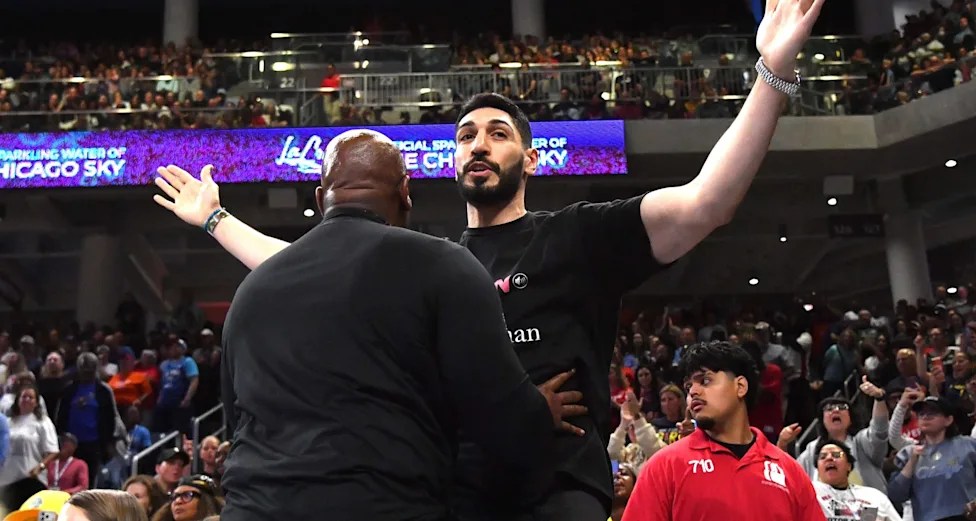
The latest visitor was Enes Kanter Freedom, a former NBA center who has lately reinvented himself as a culture-warpreneur. Freedom arrived courtside for Sunday’s Chicago Sky–Indiana Fever game wearing a T-shirt offering a pointed definition of “woman.” According to the Sky’s subsequent investigation, he began chirping at Natasha Cloud during the third quarter, apparently trying to draw her into an exchange. Cloud approached him during a timeout. Freedom stood, spread his arms and took a step onto the court before security intervened and removed him. The Sky later banned him from their home games, with owner Michael Alter saying Freedom had come to be provocative and “see how much attention he could get.”

That is an impressive amount of nonsense to fit inside one timeout.

The alleged competitive emergency underneath it all has one conspicuous defect: There has never been a transgender woman on a WNBA roster. The league has said there is no immediate eligibility matter before it and has denounced the effort by Freedom and former NBA player Royce White to declare themselves eligible for the draft as a bad-faith attempt to demean or marginalize others. Sources around the league have said neither man is eligible.

An imaginary personnel problem has nevertheless become a real workplace incident.

The Sky eventually did the obvious thing and banned Freedom. Good. But a ban announced two days after the event is the receipt, not the strategy. The broader question remains: Why is one of the fastest-appreciating sports properties in America allowing people with little evident interest in its actual product to commandeer its audience, its cameras and, eventually, its employees?

What does the WNBA think it is getting out of this?

The obvious answer is growth.

In 2024, the league attracted more than 54 million unique television viewers. Attendance rose 48 percent. League Pass subscriptions rose 366 percent. Merchandise sales through the league’s primary retail operation rose 601 percent. Attendance set another record in 2025, and by 2026 the average WNBA franchise was valued by Forbes at $414 million, up 52 percent in a year. The league’s principal national media agreements beginning this season were initially valued at about $200 million annually, four times the value of the preceding contracts.

The WNBA is no longer being discovered. It is being appraised.

That the league needed to grow is not in dispute. Its old customer base, however loyal, was not large enough to support the salaries, media rights, expansion and franchise values the WNBA now hopes to sustain. But the need for more customers does not require management to treat everyone attracted by the resulting attention as a customer worth keeping. Firms routinely decline marginal business when the costs exceed the revenue. A bar wants a crowd. It still employs a bouncer.

Caitlin Clark also does not prove what this argument often asks her to prove. She is evidence that a singular basketball star can acquire customers at extraordinary scale. She is not evidence that controversy is a growth engine, nor that good basketball cannot convert those new viewers into durable, league-wide demand. Customer acquisition and customer conversion are different jobs. Clark can get someone to turn on an Indiana game. A’ja Wilson, Napheesa Collier, Olivia Miles, the rivalries, the playoff races and the game itself have to persuade that person to return when Indiana is not playing.

Nor does Clark’s impact establish that bad-faith actors are an unavoidable toll collected at the gate of mainstream success. Freedom did not create the WNBA’s newly valuable audience. He arrived after it existed. The more plausible sequence may run in reverse: basketball created demand; demand created a larger and more valuable audience; and that valuable audience attracted outsiders who discovered they could exploit it. Calling Freedom a source of growth because he generated commotion around a league that was already growing is like crediting the pickpocket for increasing foot traffic at the fair.

Before accepting provocation as the unfortunate price of growth, the league ought to establish that the provocation is producing growth at all.

The most charitable economic explanation for the league’s caution is option value. Management has acquired an enormous new audience in a remarkably short time and does not yet know precisely what it has acquired. Some are committed basketball fans. Some are Caitlin Clark fans. Some are casual sports viewers. Some are ideological fellow travelers of one kind or another. Some are tourists. Some have arrived principally because there appears to be an argument in progress.

When a company cannot identify which new customers will become permanent, it is reluctant to close any door. A strong institutional response might alienate some unknown portion of the market. Ambiguity preserves the possibility of selling to everyone.

This is rational up to the point at which it isn’t.

An option is valuable only when exercising it might produce a positive return. The WNBA appears to be preserving options not merely for potential customers, but for anyone who sees its newly valuable audience as a stage. Silence may keep the league from offending a future season-ticket holder. It also tells the next provocateur that the premises remain available for rent… and the rent is remarkably low.

Sponsors pay substantial sums for access to the WNBA’s audience. Broadcasters pay for it. Advertisers pay for it. Freedom bought a baseline seat, provoked an exchange with one of the players, and left with days of national coverage. The league supplied the arena, the lighting, the television cameras, the recognizable athlete, and the audience. Freedom supplied a shirt.

Who, exactly, monetized whom?

The central economic mistake is confusing attention with demand.

A person who watches the Freedom–Cloud confrontation 20 times has not watched 20 WNBA games. He has watched one argument 20 times. The distinction tends to disappear on social media, where a view is a view, an impression is an impression and outrage is one of the few commodities that never seems to encounter a supply constraint. A business cannot afford to be so indiscriminate.

Attention means somebody looked. Demand means somebody repeatedly chooses the product and is willing to give up money or time to consume it. Durable demand means the person comes back after the argument has moved somewhere else.

The WNBA’s product is not generic public attention. It is professional basketball. Attention has economic value only insofar as the league can convert it into game audiences, ticket purchases, merchandise sales, sponsorship value, and long-term attachment to teams and players. A viral confrontation may contribute to gross reach while subtracting from virtually every one of those things.

It also carries an opportunity cost. Attention is finite. Every discussion of a hypothetical transgender player who does not exist displaces some amount of discussion about the basketball players who do. Every segment devoted to a courtside agitator is a segment that does not build A’ja Wilson, Napheesa Collier, Angel Reese, Caitlin Clark, or the WNBA playoffs.

The league is not merely receiving additional attention. Some of its basketball attention is being converted into political attention by outsiders who get to keep the proceeds.

This does not make every politically conservative new fan suspect. A conservative who loves basketball, purchases tickets, and disagrees with half the locker room is a customer. No business with national ambitions can require ideological harmony among millions of consumers, and no sports league has ever survived by asking the bleachers to agree on much beyond the location of the exits. Nor does holding a progressive opinion make somebody economically valuable. A person can applaud every stated value of the WNBA and never buy so much as a keychain.

The useful distinction is not progressive against conservative. It is consumer against extractor: One group consumes the product. The other consumes the conflict surrounding the product.

The second group may still buy an occasional ticket, but ticket revenue alone does not establish that a customer is profitable. Management also has to count security expenses, reputational damage, the longtime customer who does not renew, the sponsor who requests an uncomfortable meeting, and the employee expected to absorb the confrontation.

Growth is a gross statistic. Businesses live on net.

That is where the WNBA’s established fan base matters. Not because longtime customers possess a moral deed to the league, but because they have demonstrated economic value. They have watched repeatedly, bought tickets, formed communities, followed players and sustained franchises when the principal WNBA business story was whether anybody would ever do those things in sufficient numbers.

A season-ticket holder is an annuity with a seat assignment.

Businesses routinely undervalue such customers because retention is quiet. Nobody issues a triumphant press release announcing that the same person bought the product again. Customer acquisition photographs better. It comes with charts pointing upward and executives using the word “momentum.” But an uncertain new customer cannot simply be recorded as upside while a dependable existing customer is treated as a sunk cost. Existing customers are not sunk. They are recurring revenue.

The culture surrounding the WNBA is part of the product those customers have been consuming. It need not remain frozen in 2018. Every successful league changes as it grows. But if management alters the experience enough to repel high-retention customers while pursuing people with unproven lifetime value, the relevant number is not how many newcomers arrived.

It is how many valuable customers remain after the transaction.

The WNBA also operates as a multi-sided market. It has players, fans, sponsors, teams, and media partners, each of whom makes the product more valuable to the others. More fans generally make the league more valuable to broadcasters. Larger broadcasts make sponsorship more valuable. Greater revenue permits better compensation, which strengthens the player pool and improves the game.

Those are positive network effects.

But network effects can run backward. A participant who makes the experience worse for players, incumbent customers or commercial partners can subtract more value than a ticket purchase adds. One additional person inside a network is not automatically one additional unit of value. Sometimes the next person simply blocks everyone else’s view.

And then there is labor.

The players are not an in-arena comment section. They are the labor force, the content, and the reason the building has lights.

The growth-related deterioration in their working environment is no longer theoretical. In 2024, WNBA veterans complained that the influx of attention had been accompanied by racist and sexist abuse unlike anything some had previously experienced. The league created a player-safety program in 2025. In July 2026, WNBA and union leaders met again in response to an increase in racist, hateful, and abusive messages, with the league committing to enhanced security resources.

In other words, the externality has already left social media and entered the operating budget.

The league’s growth has unquestionably benefited players. The new collective bargaining agreement increased the team salary cap from approximately $1.5 million in 2025 to $7 million this season, with average salaries projected to exceed $583,000 and future compensation tied more closely to revenue.

That is real progress. It also does not make adverse working conditions free.

Economists call the additional compensation required for a more dangerous, degrading or unpleasant job a compensating differential. Unions generally call it the next bargaining demand.

Players carry two contracts. One is the collective bargaining agreement. The other is the belief that their employer will not rent access to them as part of the entertainment. The first contract can specify salaries, benefits and travel. The second governs trust.

The Sky learned that Freedom was coming roughly three and a half hours before tipoff. His tickets had not been purchased under his name, but his representative alerted the general manager. Alter later said his principal regret was deciding not to inform the players. Security acted when Freedom stepped toward the court, but Cloud had to discover the situation in real time. That sequence sends a message whether management intends one or not:

We knew a person who had publicly inserted himself into a hostile political campaign surrounding your workplace was coming. We did not tell you. We waited to see what happened.

It is not difficult to imagine how employees might update their view of institutional support after that.

This is not an argument that WNBA players must be protected from disagreement, criticism, or ordinary heckling. That would be impossible, and professional sports without heckling would sound like a library during inventory.

It is an argument that management must distinguish between a customer who has an opinion and a person who purchases proximity to an employee in order to manufacture a confrontation.

The WNBA’s own fan code provides for immediate ejection when a spectator attempts to enter the court. Security followed that rule in Chicago. But protecting the workforce cannot begin only after the customer’s shoe touches the playing surface.

Perhaps the WNBA’s cautious strategy will prove correct. A sweeping ban might create a martyr and feed the very attention economy the league is trying to starve. The present turbulence may be a temporary cost of becoming a mainstream sports property. Millions of newcomers may settle into ordinary fandom once the novelty and political opportunism recede.

The league has not been wholly passive. It has denounced bad-faith provocations, established anti-hate and player-safety initiatives, and the Sky acted decisively after Sunday’s incident. The players’ association has likewise said it will not allow its members to be turned into political pawns. But reactive enforcement is not the same thing as product protection.

The WNBA does not need to adjudicate every national political argument. It does need rules clear enough that bad-faith actors cannot profitably pretend an imaginary eligibility crisis exists. It needs league-wide conduct standards capable of distinguishing unpopular opinions from deliberate attempts to provoke employees. And it needs to evaluate its audience using conversion, retention and lifetime value – not merely mentions, impressions, and unique viewers.

The economic ledger should look something like this: Net value of growth = value of acquired customers − incumbent customer attrition − security and enforcement costs − brand degradation − opportunity costs − costs imposed on labor. No one can calculate every term precisely. That does not permit management to declare that only the first one counts.

The mistake is treating growth as the economic consideration and everything being sacrificed to obtain it as politics. The customers who built the league have economic value. The culture surrounding the product has economic value. The stories displaced by manufactured controversy have economic value. Security has a cost. Trust between labor and management has a cost. Morale has consequences. 

Everything belongs on the ledger.

The WNBA does not have to choose between old fans and new ones. It has to distinguish between people who want its product and people who want to use its product to sell something else. 

The league spent three decades building an audience valuable enough to hijack.

Its next stage of growth requires acting as though that audience belongs to it.

MLB’s Draft Proposal Isn’t a Gift to College Baseball. It’s a Bill.

Yesterday, I asked what Major League Baseball owed to the people who love it. Today, I ask what it owes to the people who play it.

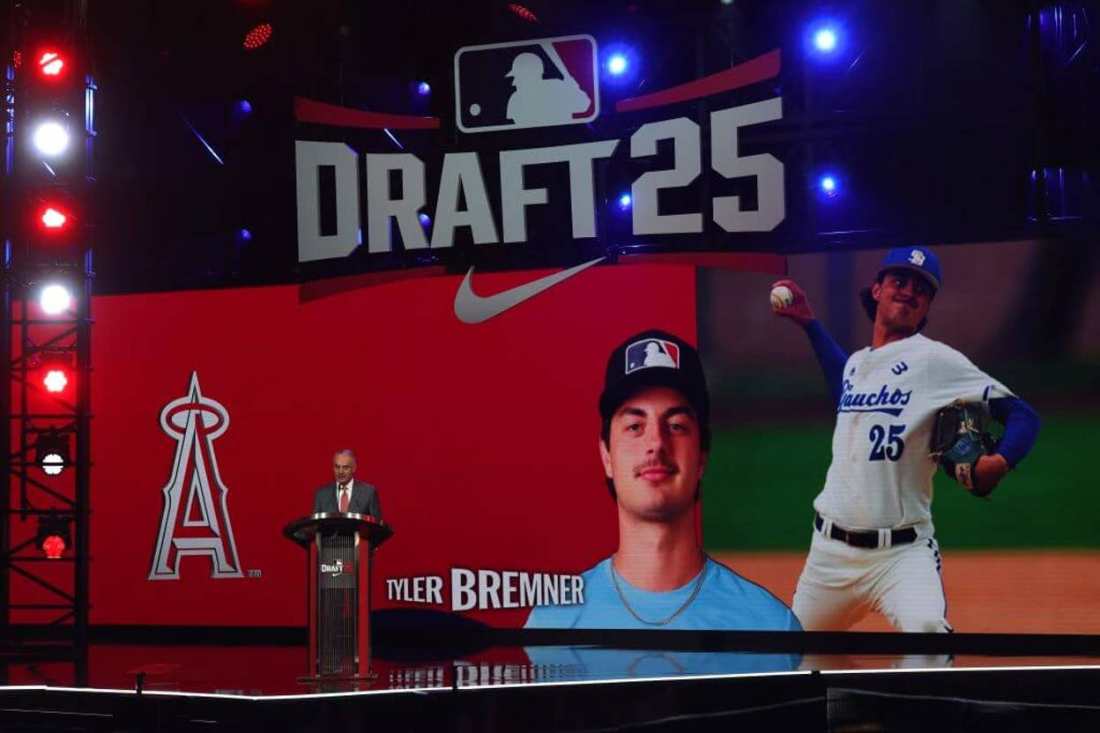
This week, MLB commissioner Rob Manfred floated a sweeping set of changes to the MLB Draft: eliminate high school players from the draft entirely, create an international draft, open college eligibility to players after their sophomore seasons, shorten the draft from 20 rounds to 12, and cut the bonus pool from $358.7 million to roughly $200 million.

There is a version of the pro-college argument that deserves to be considered seriously. If elite high school players are forced into college baseball, the college game probably does get more entertaining in the short term. More future professionals would spend time in college uniforms. Conference races would feature more name recognition. Fans would get better Friday-night arms and deeper rosters.

As a college baseball fan, I understand the temptation. A more loaded college game sounds fun. A more loaded Big West sounds fun.

But a better television product is not the same thing as a better development system. And it is definitely not the same thing as a fair labor structure.

More talent in college baseball does not magically create new value; it changes where existing value is captured. Under MLB’s proposal, players who currently have the opportunity to begin professional careers and receive signing bonuses at 18 would instead spend additional years generating value for colleges, conferences, broadcasters, and Major League Baseball before reaching the same professional marketplace.

The question is not whether fans would enjoy watching more elite prospects in college uniforms. Of course they would. The question is who benefits from delaying those players’ entry into professional baseball. Ask yourself this: Would the commissioner of Major League Baseball make these changes to help college baseball, or to help the thirty ownership groups who sign his paycheck?

If the answer is that colleges get better rosters, broadcasters get better inventory, and MLB gets a cheaper development system, then we should be honest about what is happening.

This is not just a baseball decision. It is an economic decision, and the players are the ones being asked to pay for it.

Maybe the SEC can absorb these changes. Maybe a handful of national powers can. But if MLB wants to argue that college baseball is ready to become a larger part of professional baseball’s development system, the question is not whether a few wealthy programs can handle it. The question is whether the sport as a whole can.

That is where the Big West Conference becomes an important test case.

The Big West is serious college baseball. It wins games, develops prospects, and sends players to the next level. What it does not have is unlimited money. Most of its members are public universities operating under budget constraints that look far more like the rest of college baseball than the financial environment enjoyed by the sport’s wealthiest programs.

The Big West useful here because it represents reality.

If MLB’s proposal does not make sense for the Big West, then it does not make sense for college baseball.

One of the easiest questions to forget in this debate is also one of the most important: Why does the draft exist in the first place?

Once upon a time, players were free to negotiate with any organization willing to sign them. Scouts traveled the country. They attended games, built relationships with coaches and families, evaluated talent, and tried to convince players that their organization was the best place to begin a professional career.

Teams that invested more heavily in amateur talent acquisition generally had an advantage, because investment was rewarded. If an organization wanted access to better players, it had to devote resources to finding them and signing them.

MLB eventually reframed that reality as a competitive-balance problem. Escalating signing bonuses became the justification for the amateur draft, a system designed both to distribute talent more evenly and to reduce the bidding wars that had developed for elite prospects.

But it is worth asking whether that was actually a flaw. Baseball was rewarding organizations willing to invest in scouting and player acquisition. That is not a market failure. That is how competition works.

And the restrictions did not stop with the draft itself.

Long before the draft, MLB attempted to control amateur spending through the Bonus Rule, which discouraged teams from handing out large signing bonuses by requiring certain players to remain on the major-league roster. The rule produced the “bonus baby” era and reflected a growing concern among owners about escalating acquisition costs.

The problem, from ownership’s perspective, was not that talented players were unavailable. The problem was that talented players had leverage. Elite amateurs could choose among multiple organizations. Teams competed for their signatures. Bonuses rose because clubs tried to outbid one another.

When the Bonus Rule failed to meaningfully restrain spending, owners pursued a more comprehensive solution. The amateur draft arrived in 1965 after years of concern about increasing signing bonuses and bidding wars for top prospects. The stated goal was competitive balance, but the practical effect was the elimination of an open market for amateur talent.

Over time, MLB continued tightening the system. Slot recommendations evolved into bonus pools. The 2012 collective bargaining agreement imposed strict limits on draft spending and attached severe penalties to teams that exceeded their assigned pools. Draft spending immediately declined as organizations adjusted to the restrictions.

Seen through that lens, the current proposal is not a radical departure. It is the latest step in a decades-long process.

The pattern is consistent: whenever amateur players gain leverage, MLB looks for ways to reduce it. Whenever teams compete too aggressively for talent, MLB seeks mechanisms to limit the competition. Whenever signing bonuses rise, the system is redesigned to push them back down.

The Bonus Rule limited spending.

The draft limited choice.

Slot recommendations limited negotiations.

Bonus pools limited total spending.

Penalties for exceeding bonus pools limited competition.

Shortened drafts reduced opportunities.

Now MLB is proposing age restrictions, a smaller draft, an international draft, hard slots, and a dramatic reduction in total bonus money.

Every reform is presented as a unique response to a unique problem. Yet they all point in the same direction: less leverage for amateur players. Less competition among teams. Less money flowing to labor.

It is worth pausing on the phrase “competitive balance,” because it has done a great deal of work for Major League Baseball over the years. It justified the Bonus Rule. It justified the draft. It justified slot recommendations and bonus pools and penalties and the contraction of the minor leagues. It will be deployed to justify this proposal as well.

The argument deserves scrutiny, because the actual baseball results do not match the rhetoric. Between 2014 and 2023, nine different franchises won the World Series, including Kansas City, Washington, and Texas — hardly MLB’s financial superpowers. Small-market teams have built contenders. Large-market teams have missed the playoffs. The system, whatever its flaws, has not produced the kind of dynastic lockout that competitive-balance measures are supposedly designed to prevent.

But the more fundamental problem with competitive balance as a justification is that it is unfalsifiable. If parity exists, the restrictions are working and should be maintained. If parity does not exist, the restrictions are insufficient and should be expanded. There is no state of the world in which the answer is fewer restrictions, because the premise is not a diagnosis that can be disproven. It is a permanent argument for permanent constraint.

Baseball rewards competence. It rewards organizations that scout better, develop better, and allocate resources better. Those organizations win. MLB then identifies the mechanisms they used to win and moves to constrain them, calling the constraint “competitive balance.” The pattern is predictable not because MLB is committed to fairness but because MLB is committed to limiting the ways teams can compete for talent. Every new restriction is presented as the final piece needed to level the playing field. The field is never level enough, because leveling the field was never the point. Constraining costs was.

Supporters of the proposal will argue that a hard-slot draft system creates certainty. That is true. It also creates rigidity.

Under the current structure, MLB clubs operate within bonus pools, but they still possess some flexibility in how those dollars are allocated. Teams can save money on one selection and redirect those savings toward another player later in the draft. This maneuvering is not always romantic. Often, it means drafting a college senior who will sign for $10,000 in order to free up pool space for a high school arm with leverage. That is financial engineering as much as scouting conviction. I’m not pretending otherwise. But even that constrained, imperfect version of flexibility represents one of the few remaining places where a team can make a genuine decision about how to value amateur talent.

A hard-slot system eliminates even that limited discretion. Under MLB’s reported proposal, draft bonuses would be fixed within a roughly $200 million system with little or no room for negotiation. Teams would no longer be able to move money around the board. The slot would be the slot. The bonus would be the bonus.

That might sound like a minor procedural change. It is not.

When every pick is assigned a predetermined price, the draft stops being a mechanism for expressing conviction — even the compromised, financially-engineered version of conviction that exists now — and becomes a selection queue. Teams still choose which players to draft, but they no longer decide what those players are worth. MLB decides. MLB sets the price. MLB removes the last remaining point in the amateur acquisition process where a player and a team can disagree with the assigned value and resolve that disagreement through negotiation.

For all the flaws in the current system (and they are real!) it still allows teams to back their evaluations with money. They can identify a player the market has mispriced and use the flexibility of their pool to pursue him more aggressively. They can find a college senior willing to sign below slot and redirect those savings toward a high school prospect with a strong college commitment. The maneuvering is constrained, but the principle survives: teams can still express, however imperfectly, that they value a player differently than the slot system expects them to.

In a mid-major conference like the Big West, the data is thinner, the track record harder to parse, the conviction harder to express. Players are incentivized to use the transfer portal to move to bigger programs – not for their NIL money, but solely for their tracking data.

Hard slots extinguish that principle entirely.

The proposal does not merely reduce how much teams spend. It standardizes how they are allowed to value players. The draft becomes less a marketplace than an allocation mechanism — and the people most affected by that shift are the players, who lose the ability to extract any additional value when a team believes they are worth more than the slot allows.

This is not primarily about scouting romance. It is about who sets the price, and whether anyone is allowed to deviate from it.

For all the discussion about bonuses, draft pools, and competitive balance, there is another consequence that deserves more attention. The proposal changes what baseball organizations are incentivized to value. Today, teams can still bet on projection.

They can look at an 18-year-old high school player and see something that is not yet visible to everyone else. They can trust their scouts, trust their development staff, and believe that what appears unfinished today could become something exceptional tomorrow. That is one of the fundamental ideas behind player development: a prospect is not merely evaluated for what he is. He is evaluated for what he might become.

The current system still rewards organizations willing to embrace that uncertainty. A high school player is not a finished product. He is projection, imagination, risk, and conviction. Teams that identify talent early and develop it successfully can create enormous value. That is the fun of scouting. That is the work of development. MLB’s proposal points in a different direction.

If high school players disappear from the draft and most players enter the professional pipeline only after spending multiple years in college, teams will be selecting older prospects with longer track records, more data, and more standardized résumés. The uncertainty shrinks. The variance shrinks. The opportunities for development-driven organizations to distinguish themselves shrink as well.

Instead of asking, “What can we help this player become?” the incentive becomes, “Which player already looks closest to finished?” That may reduce risk. It may also reduce ambition.

The proposal effectively shifts a significant portion of the developmental process away from professional organizations and onto colleges. By the time many players reach the draft, somebody else will have already done much of the shaping. The scouting challenge becomes less about identifying raw clay and more about selecting among partially completed products.

Organizations that invest heavily in player development have traditionally benefited from finding talent before everyone else recognized it. They could gain an edge through vision, patience, and instruction. But if the system increasingly pushes teams toward older and more predictable players, the payoff for those investments declines.

That is not competitive balance. That is a race to the middle.

This is the part that bothers me most as a baseball person.

MLB’s proposal rassumes that development environments are interchangeable. If a player spends two years in college instead of two years in professional baseball, the thinking goes, he is still developing. The timeline changes, but the outcome remains largely the same. That sounds reasonable until you examine what “college baseball” actually means.

Player development at LSU is not player development at Long Beach State.
Player development at Long Beach State is not player development at UC Riverside.
Player development at UC Riverside is not player development at a junior college.

And none of them are the same as player development inside a professional organization with full-time coaches, medical staff, nutrition programs, analytics departments, strength coaches, and a single mission to make the player better at baseball.

Even within the Big West, programs operate under different realities. Across Division I baseball as a whole, those differences become even larger. Some schools possess resources that rival professional organizations in certain areas. Many do not. And that doesn’t even touch on Division II, III, NAIA, or junior college ball. Player development is not merely the passage of time. Development is the product of environment.

Some players will benefit. Some players will stagnate. Some players will find environments that accelerate growth. Others will find environments that do not.

The point is not that college baseball cannot develop professional players. It clearly can. Every year, programs across the Big West and the rest of the country produce major-league talent. The point is that development quality varies dramatically across the baseball landscape, and if MLB wants colleges to shoulder a larger share of the developmental burden, it cannot simply wave away those differences. A player developed at Cal Poly does not arrive at the draft with the same measurables as a player developed across town at UCLA, but a hard-slot system pays them the same regardless.

The college-baseball fantasy version of this proposal assumes every elite high schooler becomes a campus star, but that is not development analysis; that is fan fiction. Some elite high school prospects would thrive in college baseball. Some would become immediate stars. Some would elevate programs and conferences from the moment they arrived. Others would not.

Some would arrive on campus and discover they are competing against 21- and 22-year-olds who have already spent years in college strength programs. Some would get buried behind veteran players on deep rosters. Some would transfer after struggling to find playing time. Some would get hurt. Some would land in developmental environments that fit their needs perfectly. Others would not. Baseball is full of players who blossomed after receiving the right opportunity and players whose progress stalled because they landed in the wrong situation at the wrong time.

Just as the fact that a player was talented enough to be drafted out of high school does not guarantee he would become a college star, just as importantly, it does not guarantee college baseball would even be the best place for him to become the player he could be.

Even if college baseball receives an influx of talent, it is not clear who actually benefits from that influx. The optimistic version imagines elite high school prospects spreading themselves across the college landscape, raising the level of play everywhere they go. The reality is likely to be far messier. The most coveted players will not suddenly stop preferring the programs with the best facilities, the largest NIL opportunities, the deepest support staffs, the most national exposure, and the strongest track records of producing professional players.

The richest programs will get the first opportunity to absorb the new talent pool. Everyone else will sort through what remains. That creates a predictable chain reaction.

More elite prospects arrive at the top of the sport. Roster competition intensifies. Playing-time opportunities shrink. Logjams develop. Players transfer. Players look for opportunities elsewhere. Talent spills downward.

The SEC gets the first bite. The Big West gets the overflow… that is, until those players enter the transfer portal.

Overflow is not investment.

Overflow creates pressures of its own. More players competing for limited roster spots. More demands on coaching staffs. More scholarship decisions. More developmental responsibility for programs that are not necessarily receiving the resources required to shoulder it. From a Big West perspective, that is the concern.

The conference could become less a beneficiary of the proposal than a pressure valve for it. The talent may flow downhill, but the costs will, too.

It’s easy to talk about draft policy in terms of percentages, bonus pools, and eligibility rules. It’s much harder to talk about what those changes mean for pitchers. Because, for pitchers, this proposal is not just about when money is earned; it is about when risk is assumed.

Under the current system, a high school pitcher selected in the draft has the option to enter a professional organization immediately. That comes with structure. Workload monitoring. Medical staff. Strength and conditioning programs designed around long-term durability. Financial protection through a signing bonus that reflects both talent and uncertainty.

The proposal changes that timeline.

If high school players are removed from the draft, many of the best young arms will be required to spend at least two years in college baseball before they are eligible to be drafted. During that time, they are still throwing. Still accumulating innings. Still managing velocity expectations, competitive workloads, and the constant pressure to perform in order to maintain draft stock. But they are doing it without professional compensation, and without professional-level control over their environment.

Pitching is not a linear development curve. It’s fragile. It’s workload-sensitive. It is shaped as much by usage decisions as by talent. A high school arm who might have signed for significant money and entered a professional system with individualized workload management, pitch design resources, and long-term development planning instead spends those formative years trying to balance performance, durability, and draft positioning inside a college system that serves multiple masters at once: winning games, managing rosters, and developing players under scholarship and academic constraints.

And if something goes wrong, the consequences are not theoretical. An elbow injury. A velocity drop. A missed season. A mechanical adjustment that never takes. For MLB organizations, the financial risk is deferred. For colleges, the player becomes another roster challenge. For the player, the opportunity may never return in the same form.

For pitchers, this proposal does not just delay income; it asks them to carry catastrophic injury risk before they are allowed to be paid. That is the core tension buried inside the cost-shifting argument.

The system does not eliminate risk; it relocates it, and pitchers are where that relocation becomes most visible.

There’s one more downstream consequence to having fewer young players enter professional baseball earlier in their careers. If high school players are removed from the draft and the process is shortened to 12 rounds with a significantly reduced bonus pool, the composition of the minor-league system begins to shift immediately. Fewer 18- and 19-year-olds enter professional baseball. More players arrive older, more developed, and closer to major-league readiness.

MLB has already demonstrated that it sees a relationship between draft volume and minor-league footprint. The 2021 contraction eliminated 42 affiliated teams. That restructuring coincided with the draft being cut from 40 rounds to 20. These were not separate decisions made by separate constituencies. They were part of the same reorganization, justified through the same language of efficiency, facility standards, and player-development optimization. MLB’s position was straightforward: fewer draftees meant fewer affiliates were necessary.

The current proposal would cut another eight rounds. That means roughly 240 fewer players entering professional baseball through the draft each year.

It is true that the relationship between draft rounds and minor-league structure is not perfectly linear. Low-A rosters are also populated by international signees, who made up more than a quarter of Opening Day players at that level in 2023. Rehab assignments flow through the lower levels. Organizations need to field full-season affiliates regardless of how their talent is distributed. These are real considerations.

But they are unlikely to halt the contraction logic, because the international draft MLB is simultaneously proposing would not increase the number of international signees entering the system. The same players who would have signed as free agents would instead be drafted, and if the removal of bidding incentives depresses participation — as it has in the domestic market — the international pipeline could shrink rather than grow. The overall flow of players into professional baseball would still narrow. MLB would still have fewer bodies to assign, fewer development arcs to manage, and a demonstrated willingness to treat fewer players as justification for fewer teams.

It does not require cynicism to see where this leads, only memory. MLB has already made this trade once. The proposal puts the same logic back on the table, this time with eight fewer rounds and a smaller bonus pool providing the justification.

And the cost of further contraction would not fall on MLB. It would fall on the players who lose roster spots, the coaches and staff who lose jobs, the communities that lose affiliated baseball, and the late bloomers who need more time than a narrowed pipeline will ever offer them.

There is another way to describe this, too: MLB’s proposal takes corporate risk and shifts much of it onto publicly-funded institutions. Professional baseball no longer wants to carry as much of the financial risk involved in identifying, signing, and developing young players. So the burden moves elsewhere: to families, to college programs, and very often to public universities already operating under tight budget constraints.

Major League Baseball knows this model well. It has spent decades persuading cities and states to finance stadiums, arguing that the public benefits from the presence of professional baseball even if the revenue flows primarily to the owners. MLB is skilled at positioning public investment as shared opportunity, at describing subsidies as partnerships, at making the case that what is good for baseball is good for everyone. The current proposal applies that same logic to a different part of the pipeline. MLB wants public universities — funded by taxpayers, operating under state budgets, answerable to legislatures — to absorb more of the financial risk involved in developing professional players. The scholarship dollars, coaching salaries, facility costs, and medical resources required to develop an elite prospect would increasingly come from public funds.

If the player succeeds, MLB gains a developed asset. If the player does not — if he gets hurt, stagnates, transfers, or simply fails to progress — the public has already paid for the attempt. MLB captures the upside. The public underwrites the risk. This is not a new story. It is the stadium-financing model adapted for player development, and MLB did not need to invent it. It just needed to call it something else.

If high school players are no longer eligible for the draft, they do not stop developing for two or three years. They still need coaching. They still need training environments. They still need strength programs, medical care, nutrition, travel opportunities, showcase access, and competitive innings against high-level competition. Those costs do not disappear; they move.

In the United States, they move first to families.

Youth baseball has already become an expensive ecosystem, with families spending more than ever to keep athletes in competitive pipelines. Baseball is already one of the most expensive youth sports in America. According to the Aspen Institute’s Project Play initiative, average youth sports spending has risen sharply in recent years, increasing by roughly 46 percent from 2019 to 2024, with families now spending over $1,000 per year on a child’s primary sport on average. But that average understates the true cost of serious baseball development.

Travel ball, showcases, private instruction, specialized training, tournament fees, hotels, flights, rental cars, recruiting camps, and year-round competition can push the cost far beyond the average family’s comfort zone. For many players, getting seen now requires not just talent, but access to an expensive private infrastructure built around exposure. Baseball in America is already disproportionately played by kids whose families can afford the path. Talent still matters, but access matters, too.

By removing the ability for high school players to enter the draft, the system pushes more development time into precisely the environment where costs are already concentrated: the pre-collegiate amateur pipeline. That means more years of private training, more showcase participation, more travel exposure, and more financial commitment required before a player ever reaches a point where professional organizations are allowed to evaluate and compensate him.

You do not need to put a sign on the door saying working-class kids are unwelcome. You just need to make the path expensive enough that their families cannot keep saying yes.

And if that pathway becomes even longer — if players must now wait additional years before they can be drafted — then the financial pressure only increases. More time in the pay-to-play system. More costs borne by families. More dependence on early specialization and private infrastructure.

The proposal also deepens a distortion that already warps amateur development. The pre-draft showcase circuit increasingly rewards players who can produce the right numbers in controlled environments: spin rates, exit velocities, throwing velocities measured on standardized equipment. Those numbers are genuinely predictive, but they are not the same thing as knowing how to pitch, how to hit, how to compete. A 17-year-old who trains to maximize TrackMan output at a Perfect Game event is making a rational decision in a system that will reward him for those numbers. Whether that training makes him a better baseball player — or a healthier one — is a different question, and one the system does not ask with the same urgency. By pushing more players through more years of this incentive structure before they can be drafted, the proposal doesn’t just delay professional entry. It extends exposure to an evaluation environment that increasingly rewards measurable outputs over developed skills.

The result is not a broader talent pool; it is a more filtered one. A system that selects not just for ability, but for access to sustained financial investment during the most formative years of development.

MLB is not entering a neutral environment. It is entering one that already sorts players by economic capacity long before it sorts them by draft status, and then asking that system to carry even more of the load.

Then the costs move again, into college baseball.

That stratification is becoming more pronounced. A quiet assumption sits underneath MLB’s proposal: that college baseball is becoming a more level playing field. More scholarships. More NIL money. More resources. More exposure. On paper, that sounds like a rising tide. In practice, it is more likely to be uneven water levels.

The problem with telling players to “just go to college” is that “college” is not a single economic reality. At one end of the spectrum are programs that can fully fund expanded scholarship limits, invest heavily in facilities, leverage NIL infrastructure, and recruit with the resources of near-professional operations. At the other end are programs trying to adapt to increased financial demands without the donor base, institutional support, or athletic department bandwidth to match.

The proposed shift from 11.7 to 34 baseball scholarships does not erase that divide; it exposes it.

According to Baseball America, the expansion in scholarship limits could require many programs to raise an additional $1 million to $1.2 million annually just to remain competitive under the new structure, and it is widely viewed as a change that disproportionately benefits larger athletic departments with deeper financial backing.

Conferences like the Big West are not programs operating with SEC-level football subsidies or massive donor ecosystems. They are competitive baseball programs housed within public universities, where athletic budgets are balanced across many sports and financial flexibility is limited. So when scholarship limits expand, the gap does not necessarily close. It often widens.

Wealthier programs absorb the change and turn it into an advantage: more roster flexibility, more recruiting power, more depth. Mid-major programs are forced to make tradeoffs: partial scholarships instead of full rides, tighter roster construction, and increased pressure to develop under-recruited players rather than compete directly for the top of the market.

That is not an even adjustment. Benefits accrue most efficiently to the programs already best positioned to capture them.

On top of that, tracking technology like Hawk-Eye and TrackMan is concentrated at wealthier programs, further compounding the resource advantage. The proposal doesn’t just favor programs with more money; it favors programs whose players are more measurable, which is often the same thing.

The Big West does not disappear in this environment. But it competes in a different lane — one defined less by equal access to resources and more by efficiency, development, and finding value where larger programs are already looking first.

Which circles back to the central issue: MLB is asking college baseball to absorb more responsibility for player development, but it is doing so in a system where “college baseball” is becoming more stratified, not less.

The international draft fits this same pattern. MLB will present it as a separate conversation. A different problem. A different market. A different set of solutions. It is not. It is the same logic applied to a different geography.

The stated goals are familiar: transparency, order, and fairness in how international amateur players are signed. The current system, MLB argues, is too informal, too opaque, too prone to early handshake deals and under-the-table commitments. Those concerns are not entirely fabricated. The international market has always operated differently from the domestic draft system, with its own timelines, agreements, and incentives. But the mechanism MLB proposes follows the same pattern seen throughout its domestic draft reforms.

Remove bidding.

Reduce negotiation.

Standardize prices.

Limit player choice.

And present the result as fairness.

Transparency is not the same thing as empowerment. A market can be fully visible and still heavily constrained.

MLB has used similar logic in the domestic draft for decades: slot values, bonus pools, penalties for overspending, and increasingly rigid structures that reduce the range of outcomes available to both players and teams. The international draft would extend that framework globally, applying the same philosophy to a different talent pool.

MLB will call it transparency. But transparency without bidding is not empowerment. It is price control with cleaner paperwork. Different map, same direction.

There is one interpretation of this proposal that is tempting because it feels tidy and familiar: This is just bargaining.

MLB is presenting an aggressive set of changes in order to reset expectations ahead of a new Collective Bargaining Agreement. The real outcome, under this reading, will be something more moderate. A negotiated middle ground. A softened version of the original idea. That may be true in part, but it is not the whole story.

MLB does not need every element of this proposal to survive in order for the strategy to work. It only needs to shift the starting point. If the opening position is extreme enough — eliminate high school draftees, cut the draft nearly in half, reduce the bonus pool dramatically, reshape international signing structures — then even partial concessions can represent meaningful movement toward MLB’s desired outcome. What looks like compromise in the final agreement may simply be a reduced version of a more aggressive baseline.

That is the nature of collective bargaining. The first offer is not meant to be final. It is meant to define the boundaries of what “reasonable” even looks like in later negotiations, which is why it is important not to treat each proposal as a literal prediction of the final system.

It is better understood as a direction of travel.

And that direction is consistent across every component of the plan: fewer amateur entry points, reduced bonus pools, more standardized compensation structures, and tighter control over when and how players can access professional baseball.

This is not a development philosophy; it’s a negotiation posture.

Collective bargaining does not have a pitch clock. The union does not have to swing because the owners threw something near the plate. But the strike zone does get defined by what is put on the table first, and once that happens, everything after it starts from a different place.

If MLB cannot tell the difference between strengthening college baseball and shifting costs onto it, then it understands even less about its talent pipeline than I feared. And if it proceeds anyway, conferences like the Big West will not be a beneficiary of that misunderstanding. They will be where the consequences show up first.

Welcome… With an Asterisk

I have really made an effort over the last few years – no, I swear, I have! – to remove myself from the petty, day-to-day squabbling that politics has become in the social media age. Not because I imagine myself to be in any way above it, but because I don’t imagine that the solution to any of the problems facing us in June 2026 is more noise.

Sometimes, a story comes along and chooses you.

I was not online on June 12th because I was graduating from college. That’s a long story in and of itself – graduating from community college at the age of forty-nine – but the important takeaway is that I did not spend much time online that day. In fact, I wasn’t online much the following weekend, either, as I was on a trip shooting the Milky Way in Anza-Borrego Desert State Park.

So imagine, please, my surprise when I opened my phone and saw the story about Landen Roupp, Ryan Walker, Sam Hentges, and JT Brubaker chose to violate MLB uniform policy on the San Francisco Giants’ Pride Night.

Three of these Giants pitchers added Genesis references to their Pride Night caps, another (Hentges) refused to wear the cap. Their postgame comments framed the controversy as a misunderstanding, but what they largely avoided was the harder question: why LGBTQ fans experienced the gesture as rejection in the first place.

Here’s the thing: I am almost fifty years old. I went to high school ten miles away from JT Brubaker. He pitched at the University of Akron and I played at Kent State, a twenty-minute car ride away when there’s traffic on US-261. As a queer athlete in both high school and college, I have known dozens, if not hundreds, of JT Brubakers. Nothing about this surprised me. What surprised me was how little ownership followed.

I wanted to write something about this not because I want to add more anger or more disappointment to the pervasive culture wars, but rather because I just want you all to know just how exhausted I am.

Let’s talk about Pride Nights. Why do they exist? If you ask most people, they’ll point at the Dodgers’ “Gay and Lesbian Night” in 2000, which was actually a response to an ugly incident where a lesbian couple was ejected from Dodger Stadium for kissing. Sharper-eyed fans might go back a bit farther and point at the Marlins’ “Gay Day” event in 1998.

One thing is for certain: whether called “Pride Night” or something else, Major League Baseball helped set a precedent when it came to showing non-heterosexual fans that they were as welcome at the ballpark as anyone else. And the San Francisco Giants, specifically, set a precedent even within Major League Baseball.

You see, long before any so-called “Pride Night,” “Gay Day,” or “Gay and Lesbian Night,” the San Francisco Giants hosted “Until There’s A Cure Day” way back in 1994 to promote AIDS awareness – a tradition they have carried on ever since. The Giants, historically, are not just a team that happens to play in San Francisco; they have often positioned themselves as a civic institution of San Francisco, which means engaging with a city where LGBTQ identity, politics, public health, and community life are central to the city’s modern history.

In 2021, the Giants became the first MLB team to incorporate Pride colors into their on-field uniforms, wearing a Pride-colored SF logo patch on the jersey sleeve and a custom cap with Pride colors in the SF logo. That moved Pride symbolism from the concourse into the actual visual identity of the team on the field. In sports terms, that is a bigger statement. It says inclusion is not just an add-on theme night; it is something the club is willing to wear as part of the uniform.

Pride Night isn’t a demand that every player become an activist. It’s an invitation for a community to feel welcome.

So what, exactly, is the controversy is with the Genesis verse players wrote on their caps? I’m not here to debate the theology of the verse itself. I am a practicing Jew; not a fundamentalist Christian, and I have no interest or desire in parsing out the specific meanings these men want to ascribe to this verse.

Symbols acquire meaning through context. If a player writes Genesis 9 on a random Tuesday in August, it means one thing. If he writes it specifically on Pride Night, beside a rainbow logo, it means something else entirely.

If this was simply an expression of faith, why was it expressed only in the exact moment when the rainbow was associated with LGBTQ people?

And this, I think, is where the backlash really begins.

Not with the verse itself. Not exactly. Not even with the refusal to wear the cap, though that is its own statement. The backlash comes from the combination of the act, the setting, and the refusal to acknowledge the setting.

Pride Night is not neutral ground. It is not a random theme night where everyone gets a bobblehead and goes home. It exists because, for a very long time, LGBTQ people were not made to feel welcome in public life, in family spaces, in religious spaces, or in sports spaces. Pride Night is one of the few nights where the institution says, explicitly and without apology: you belong here, too.

So when a player takes the symbol created for that night and alters it with a Bible verse about the rainbow belonging to God, fans are not inventing the subtext out of thin air. They are reading the gesture in the context in which it was made.

That is not unfair. That is how symbols work.

A rainbow on a cap during Pride Night is not merely a rainbow. It is the team’s chosen symbol of welcome to LGBTQ fans. Writing Genesis 9 on that cap does not happen in a vacuum. It happens on the exact night the team has set aside to recognize a community that has spent generations hearing religious language used to justify exclusion, rejection, shame, and political hostility.

That does not mean every Christian is anti-gay. It does not mean every reference to Genesis is hateful. It does not mean every player who wrote the verse sat in the clubhouse plotting cruelty. Again, I cannot know their hearts, and I do not care to pretend that I can.

But I can see what they did, and so can you, and so can they.

They took a symbol being used to welcome LGBTQ fans and placed a competing claim on top of it.

That is why “I meant no hate” is not enough. Maybe they did not mean hate. Maybe they meant witness. Maybe they meant faith. Maybe they meant, as some have suggested, that the rainbow has a biblical meaning separate from Pride. But the act still functioned as a correction. It took the team’s message that LGBTQ fans are welcome here and amended it in real time to serve the players’ own purposes.

It said, in effect: yes, but.

Yes, but the rainbow is God’s.

Yes, but I need you to know I do not affirm this.

Yes, but my discomfort deserves to be visible tonight, too.

And that is the part that lands as rejection. Not because LGBTQ fans are fragile. Not because we are intolerant of Christianity. Not because we cannot handle disagreement. It lands as rejection because Pride Night is not asking players to settle every theological question in American life. It is asking them to participate, for one night, in a basic gesture of welcome.

The players have repeatedly insisted they meant no hate. But they have largely avoided engaging with the more important question: why did LGBTQ fans experience the gesture as rejection?

That is the conversation they seem determined not to have.

Intent matters. Of course it matters. But intent is not the only thing that matters. Impact matters, too.

If I step on your foot and tell you I did not mean to, that may change what you think of my character. It does not change the fact that your foot hurts. And if, after stepping on your foot, I spend three days explaining that I am actually a very loving person, while never once acknowledging that I am still standing on your foot, eventually the conversation is no longer about the original accident. It is about my refusal to move.

That is where the Giants are now.

The organization has tried to thread the needle by affirming Pride Night while also affirming the players’ individual choices. In some abstract HR seminar, maybe that sounds reasonable. In San Francisco, on this subject, with this team’s history, it sounds like evasion.

Because this was not a franchise with no history to draw on. This was the San Francisco Giants.

You do not get to wrap yourself in that history when it is convenient and then act confused when fans expect you to defend it.

That, to me, is the deeper source of the backlash. It is not simply that four players made a choice. It is that the choice exposed a gap between the brand and the culture. The Giants have told LGBTQ fans, for decades now, that they are part of the family. Then, on the night set aside to celebrate that family, several players chose to distance themselves from the gesture of welcome, and the organization responded as if the main problem was everybody noticing.

There is also a reason the “religious freedom” framing feels so hollow here. Nobody asked these players to renounce their faith. Nobody asked them to preach a sermon in support of same-sex marriage. Nobody asked them to become ambassadors for a cause they do not believe in. They were asked to wear the uniform selected by their employer for that game, in the same way players routinely wear camouflage, pink, Jackie Robinson’s number, throwback jerseys, City Connect uniforms, and any number of symbols that are not individually tailored to each player’s conscience.

If a player can wear a gambling sponsor’s patch, a beer logo, a military appreciation cap, or a corporate-branded jersey without stopping the game to clarify his theology, then it is fair to ask why this was the moment that required visible dissent.

Why this symbol?

Why this night?

Why this community?

Those are not gotcha questions. They are the only questions that matter.

And no, the answer cannot simply be “because of my faith,” because faith is not self-explanatory. Faith can move a person toward solidarity, as it did for countless clergy and caregivers during the AIDS crisis. Faith can move a person toward service, humility, sacrifice, and welcome. Faith can also be used as a shield against having to hear the pain of the person standing in front of you.

That is why this hurts. Not because LGBTQ fans do not understand Christianity, but because too many understand this version of it all too well.

We have heard “love the sinner, hate the sin.” We have heard “I don’t hate you, I just can’t affirm your lifestyle.” We have heard “we welcome everyone,” right up until we try to bring a partner, build a family, or exist without translating ourselves into someone else’s comfort zone.

So when a player says he meant no hate, many LGBTQ fans are not hearing something new. They are hearing the language of polite rejection.

And in that sense, the backlash is not an overreaction. It is memory.

It is the memory of being told you are loved while being kept at a distance.

It is the memory of institutions celebrating you in June and abandoning you in July.

It is the memory of being treated as a political controversy when you thought you were just a fan at a baseball game.

That is why the setting matters. Pride Night is supposed to be a respite from that. It is supposed to be one of the rare places where the welcome does not come with an asterisk.

The Giants gave their LGBTQ fans an asterisk.

There is another Giants name I cannot stop thinking about now: Solomon Bates.

Bates was a right-handed pitcher in the Giants’ minor league system, most recently with the Double-A Richmond Flying Squirrels. On August 9, 2022, he came out publicly as gay on Instagram. In the same post, he announced that the Giants had released him.

I want to be very careful here. I am not saying Bates was released because he was gay. I do not know that, nor do I have reason to suspect it. Baseball teams release players all the time for reasons that are brutal, opaque, statistical, developmental, financial, or some combination of all of the above.

But the timing has always stayed with me.

Bates did not simply say, “I’m gay.” He said it while announcing that his time in the Giants organization had ended. He wrote about wanting to open doors for gay athletes like him. He wrote that gay men can play a “manly sport” if given the chance. He thanked the Giants, but also said they had given him a chip to keep going.

That is not an accusation. It is a complicated exit note from a player who clearly understood the weight of what he was saying.

And looking back now, after watching Giants players alter or reject Pride Night caps, Bates’ story feels different. Not because it proves some hidden conspiracy. It does not. But because it reminds us of the question underneath all of this:

What does professional baseball feel like to the queer player inside the room?

Not the fan in the stands. Not the team on social media. Not the organization writing copy for Pride Night. The player. The teammate. The guy sitting at his locker, listening to the jokes, reading the room, measuring how much of himself he can afford to reveal.

Ryan Walker, at minimum, was in that same Richmond pitching group in 2022. Landen Roupp arrived in Richmond later that August, after Bates had already been released, so I do not want to overstate the personal connection. But this was still the same organization, the same developmental pipeline, the same sport, the same culture.

The question is not whether Solomon Bates can be retroactively turned into evidence against any individual player. He should not be used that way. The question is whether the Giants, and baseball more broadly, have created an environment where the next Solomon Bates would feel safe, supported, and fully welcome.

Because openly gay male players in professional baseball remain almost nonexistent. That absence is not accidental. It is cultural. It is the product of locker rooms, churches, families, scouts, agents, fans, front offices, and a lifetime of young athletes learning which parts of themselves are safe to show.

So when players turn Pride Night into a moment of visible dissent, it does not only land on fans. It lands on the closeted player watching from another clubhouse. It lands on the minor leaguer wondering whether coming out would change how his teammates see him. It lands on the kid who loves baseball and already suspects there may not be room for him in it.

That is why “we meant no hate” is such an insufficient answer.

Maybe you didn’t. But would Solomon Bates have felt more welcome after watching that game?

Would the next gay minor leaguer?

This is, of course, not only a Giants story.

If anything, the Giants controversy belongs to a broader pattern across professional sports. The language has changed faster than the underlying attitudes.

There was a time, not very long ago, when the anti-gay rhetoric in men’s sports was blunt. It was slurs in clubhouses. It was casual cruelty from the stands. It was the assumption that an openly gay teammate would be a problem, a distraction, a punchline, or worse. That language has not disappeared, but it has become less socially acceptable in public.

Most modern athletes understand that. They know better than to walk up to a microphone and say they do not want gay people in their clubhouse. They know better than to say LGBTQ fans do not belong at the ballpark. They know better than to openly condemn a Pride Night in those terms.

So the opposition has changed shape.

Now it arrives as an exemption.

A patch not worn.

A jersey skipped.

A cap altered.

A warmup avoided.

A Bible verse added.

A statement that begins, inevitably, with some version of, “I love and respect everyone, but…”

We saw this in 2022, when several Tampa Bay Rays pitchers declined to wear rainbow-colored logos during the team’s Pride Night. Jason Adam, speaking on behalf of the group, framed it as a “faith-based decision,” while also saying it was not judgmental and that the players loved everyone. The phrasing was familiar because it has become the dominant modern language of objection: not rejection, exactly, but non-affirmation; not hostility, exactly, but distance.

More recent examples include Dodgers pitchers Clayton Kershaw and Blake Treinen. (It is telling, by the way, how hard it is to find examples of national media outlets being critical of these players’ actions, especially in contrast to the backlash against the Giants. That is a fight for another day.)

Hockey made the pattern even more visible. In 2023, multiple NHL players declined to wear Pride-themed warmup jerseys, again citing religious belief. The league’s eventual response was telling. Rather than simply absorb the discomfort of inclusion, the NHL eliminated themed warmup jerseys altogether. Pride was not the only theme affected, but Pride was plainly at the center of the controversy.

That is how these controversies tend to resolve: the symbol becomes the problem, not the resistance to the symbol.

And that is why the “I’m not against anyone” language deserves scrutiny. On its face, it sounds tolerant. It sounds humble. It sounds like a plea for pluralism. But to the LGBTQ fan or player on the receiving end, the sentence often lands differently.

“I’m not against you, but I will not wear the symbol that says you are welcome.”

“I love everyone, but I need to publicly distinguish myself from this gesture of inclusion.”

“I respect you, but my conscience requires me to opt out of the one night set aside to tell you that you belong.”

That is not overt condemnation. It is something softer, and in some ways more difficult to confront. It is rejection with clean hands. It is the language of distance wrapped in the language of love.

If your “love” does not include visible acceptance, then frankly what good is it?

This is why simply calling the players homophobic is less interesting than examining the structure of the moment. Whatever any individual player believes privately, the public pattern is clear. Pride initiatives ask sports institutions to make visible room for LGBTQ people. Some athletes respond by making their discomfort equally visible. Then, when fans react, the athletes insist they meant no harm and ask why everyone is so upset.

But the upset is not mysterious.

The upset comes from being welcomed by the team and then corrected by the player.

The upset comes from being told the night is for you and then watching someone use that same night to signal, however politely, that he cannot quite stand with you.

The upset comes from the gap between inclusion as branding and inclusion as culture.

That gap is where these controversies live.

And maybe that is where I land, finally. Not angry, exactly. Just tired.

Tired because the question underneath all of this is not complicated. It is simply:

What does Major League Baseball owe to the people who love it?

Not ideological uniformity. Not forced belief. Not a clubhouse full of players pretending to hold convictions they do not hold. I do not need every baseball player to think like me, worship like me, vote like me, or understand my life perfectly.

But I do think that baseball owes its fans the truth.

Because here is the thing I keep coming back to: I was here long before these guys, and I will be here long after.

Before JT Brubaker was a Giant – or even a Tecumseh High School Arrow – I loved baseball.

Before Landen Roupp threw a major league pitch, I loved baseball.

Before any of these players had a platform from which to explain that they meant no harm, I loved baseball.

And when they are gone – traded, released, retired, forgotten by everyone but the transaction logs and the most committed sickos among us – I will still love baseball.

It is simply the truth of fandom. Players pass through the game. Executives pass through the game. Owners pass through the game, even if never quite soon enough. But fans remain. We carry the history. We teach the rules. We remember the stupid losses, the perfect summer nights, the box scores, the voices on the radio, the players who broke our hearts and the ones who made us believe in something for nine innings at a time.

So what does baseball owe to the people who love it?

At the very least, it owes us enough respect not to treat our belonging as negotiable.

If Pride Night is just a marketing exercise, say that. If inclusion means “you are welcome here, provided no one important feels uncomfortable,” say that. If the rainbow can be placed on a scoreboard, sold on a ticket package, printed on a cap, and celebrated in a press release, but cannot actually be defended when the moment asks for it, then say that, too.

Because what hurts is not simply that some players objected. I am old enough, and have spent enough time in locker rooms, to know those objections exist. What hurts is the insistence afterward that no one should have noticed.

JT Brubaker says he just wants to play baseball.

So do I.

I have wanted to do that my whole life.

That is the point.

Pride Nights exist because, for a very long time, queer fans and queer athletes were told, explicitly and implicitly, that baseball was not for them. Sometimes that message came as a slur. Sometimes it came as silence. Sometimes it came as a joke, a policy, a sermon, a shrug, or a locker room calculation about which parts of yourself were safe to reveal.

Now the language is softer. The rejection is more careful. Everyone loves everyone. Everyone respects everyone. Everyone means no harm.

And still, somehow, on the one night set aside to say that LGBTQ fans belong at the ballpark, the message becomes conditional.

That is the tragedy here. Not that some players still believe what they believe. Not even that some players chose to make that belief visible.

The tragedy is that they seem genuinely surprised when fans notice.

Baseball does not owe me agreement. It does not owe me comfort. It does not owe me a world without disappointment.

But if it is going to keep telling queer fans that we are welcome, then it owes us enough respect not to act confused when we ask whether welcome actually means welcome.

Because I love this game.

That is why this hurts.

What We All Got Wrong About the Anteaters

You could be forgiven for expecting big things from UC Irvine’s baseball team on March 1st of 2026. Fresh off the heels of their 2025 NCAA Regionals appearance, they got off to an 8-3 start and took down two ranked opponents – #22 Vanderbilt and #24 Oregon – in the same weekend at the Live Like Lou Las Vegas Classic.

But how swiftly things change in college baseball.

Since that weekend, where the Anteaters faithful were riding high, the team has gone 1–11 since, including a sweep at the hands of rival Cal State Fullerton, with their only victory a come-from-behind 4–2 win over CSUN at home.

Entering play this weekend’s series at Long Beach State, Ben Orloff’s squad has an overall 9-15 record, including going 1-5 in conference play thus far, which has me asking the question: did the team really change, or did we just misread what we saw?

Of course, February and March are no stranger to surprises. It isn’t unusual to see a team get off to a hot start and fade as the calendar pages flip. With UC Irvine, it felt less like a surprise and more like a continuation of their success: There was a baseline belief. Here was a solid program, coming off of a strong year, with a good incoming transfer class headlined by centerfielder Tommy Farmer.

Their early record reinforced, rather than challenged, prevailing beliefs. The ranked wins didn’t shock – they validated.

So, then, what changed?

Surely, something broke. The team regressed. The early read must have been wrong. Right? Not so fast.

Much more likely is that, in economics terms, we were reacting to the Anteaters’ February not in the context of their overall talent level, but rather as confirmation bias: We don’t just react to new data; we react more strongly when that data confirms what we already believe.

The regional appearance? That’s prior data. The 8-3 start? That’s reinforcement. The ranked wins? Confirmation spike. 1-11 since? Correction.

The truth is, UC Irvine is probably no more an .083 winning percentage team than they were a .727 winning percentage team, but rather somewhere in the middle. At season’s end, the 1-11 stretches count just as much as the 8-3 stretches. Good teams just hope there’s a few more of the latter than of the former.

Not all results are equally informative, but we treat them like they are. When a good stretch of play comes early in the season, that’s confirmation that last year was not a fluke. When a team gets two loud, visible wins on a national stage, that feels like validation.

But twelve quieter, more informative games can slip by unnoticed.

That’s classic signal versus noise: We overweight high-visibility results and underweight accumulated evidence. The accumulated evidence suggests that the Anteaters are not currently an 8-3 team or a 1-11 team, but rather a 9-14 team. A couple of bounces this way or that, and a 9-14 team looks like a 14-9 team.

To quote one of my least-favorite adages, that’s why they play the games.

This is why it’s so important to observe teams live and in-person before making a judgement on their true talent ability. Like most things in baseball, loathe as we often are to admit it, it’s usually a product of luck and sequencing. There really are not two versions of the UC Irvine Anteaters baseball team, but one – and that one is capable of winning every game they enter. They are just as capable of beating the #22 team in the country as they are to getting swept by Cal State Fullerton.

What looks like a collapse is actually more like a correction. Perception rose quickly and now it’s adjusting downward. Recalibrating, to borrow a market term.

The team itself has not moved nearly as much as that perception has.

College baseball amplifies this because the structure of the sport makes misreads quite likely. The schedule happens in quick bursts: A three-game series concentrates outcomes. Each team will face an opponent only once in a season, and how they perform in any given series is easy to overweight.

None of this is unique to UC Irvine. Early-season narratives across the sport follow this pattern. There’s a reason “on-pace guys” have become a meme, but it goes beyond individual stats. Rankings volatility, conference perception, reactions to non-conference wins and losses. It’s easy to over- or underweight data.

To my eyes, the 2026 version of UC Irvine’s baseball team is a very strong squad. The offense still carries some holdovers from the previous season, but a lot of players are still finding their everyday roles. As much as we may want certainty, and as much as we may mistake confirmation for truth, the fact is that the book is yet to be written on this team.

The next time a single weekend “proves” something, it’s worth it to remain skeptical. To get eyes on a team; on a player, rather than to react aggressively and spend weeks correcting. After all, by the time the narrative peaks, the correction is often already underway.

Week 5 Evaluator’s Notebook: UC Irvine @ UCLA and Cal State Fullerton, Hawai’i @ Long Beach State

Liam O'Brien, in his green #41 throwback jersey, delivers a pitch.

Early March, as teams move into conference play, is when the college season begins to settle into its rhythm. Opening weekend adrenaline has faded, pitchers are starting to stretch deeper into outings, and hitters begin to reveal whether their early production reflects real skill or simply early-season timing against arms that are still building up.

This week brought a mix of environments and looks. I started in Westwood for UC Irvine at UCLA, moved down the freeway to Fullerton for UC Irvine at Cal State Fullerton, and finished the weekend in Long Beach for the final two games of the Hawai‘i–Long Beach State series.

As always, the focus was on draft-eligible players and prospects worth monitoring as the season unfolds.

Here’s what stood out.

UCLA Bruins

Roch Cholowsky — SS | 6’2”, 202 lbs. | Junior | R/R

Cholowsky looks like a professional the moment he walks onto the field. The frame is athletic and well proportioned — high waist, narrow hips, and good overall fluidity in the way he moves around the diamond. It’s an easy body to project.

Offensively, the swing is the standout tool. The bat stays in the zone for a long time and he finishes through the baseball with authority. The swing stays balanced throughout, and he reacts well to pitches on the inner half without losing his base.

There’s real leverage and bat speed here, along with present strength. The profile suggests legitimate power production, and it’s easy to see a 15–20 home run floor at maturity.

Defensively, I currently see an average shortstop with room for more. The body moves well and the actions are fluid. There is no pressing reason to move him off the position at this stage, and the arm strength supports the profile.

On the bases he accelerates well and uses his hips efficiently when turning, another indication of overall athleticism.


Roman Martin — 3B | 6’2”, 208 lbs. | Junior | R/R

Martin was the most impressive defensive third baseman I’ve seen so far this season… at least until the Long Beach State series.

His arm actions stand out immediately. The throwing motion is whippy but controlled, generating plenty of carry across the diamond. While most of his throws came from a traditional over-the-top slot, he showed the ability to adjust and throw effectively from multiple arm angles.

The hands and reactions were consistently sharp. He reads the ball well off the bat and moves comfortably at the position.

The body is athletic and durable enough to remain at third base long term, though if circumstances ever demanded it, the skill set would likely translate to right field as well. For now, though, there is no reason to move him.


Angel Cervantes — RHP | 6’2”, 215 lbs. | Freshman

Cervantes presents an interesting look on the mound. He’s lean through the torso with proportional shoulders and hips, though the lower half is somewhat thin for a pitcher of his size.

The delivery begins with a high leg kick that points almost toward second base before he drives down the mound. He holds the ball low through the delivery and reveals it late, releasing from a low three-quarter slot that adds deception.

He relies heavily on his fastball, but it’s a good one. The pitch shows riding life and plays well up in the zone.

His secondary mix includes a slider and a changeup. The slider is used effectively both to backdoor left-handed hitters and to frontdoor right-handers, while the changeup generates swings and misses within the zone.

The raw movement on the secondary pitches appears somewhat modest, but the deception built into the delivery makes the overall arsenal play better than the raw shapes might suggest.

UC Irvine Anteaters

Trevor Hansen — RHP | 6’2”, 195 lbs. | Junior

Hansen continues to look like the most complete draft follow among the arms I’ve evaluated so far this spring.

He has a lean, athletic build with room to add strength through the shoulders and upper back. The lower half provides functional strength without being overly thick, and he moves like a good overall athlete.

The arm is quick with excellent arm speed. His delivery can appear high-effort at times, even slightly violent, but he maintains enough balance and body control to repeat it consistently.

Hansen leans heavily on a fastball that sits 91–93 mph, and the pitch plays well thanks to its heaviness and his ability to locate it. He spots the fastball effectively and uses it both to challenge hitters in the zone and to expand the strike area.

His 12–6 curveball (around 83 mph) is a real weapon. It features significant vertical drop and he throws it confidently in any count, both for strikes and as a chase pitch.

The changeup (around 81 mph) showed the ability to generate whiffs within the zone, though it did not draw many chases in this particular outing.

When he missed with the fastball, the misses tended to be arm-side, suggesting command drift rather than deeper mechanical issues.

Velocity dipped slightly late in the outing, touching 89 mph by the fifth inning, but overall he repeated his mechanics well and maintained his approach.


Alonso Reyes — 1B | 6’0”, 195 lbs. | RS-Junior | R/R

Reyes is a converted catcher who now plays first base, and the athletic background shows.

The build is lean and athletic with noticeable lower-half strength and ropey forearms. He’s broad-shouldered without carrying excessive bulk, relying more on wiry strength than mass.

At the plate he shows discipline overall but will expand the zone against quality offspeed pitches. There is raw strength in the profile, though it did not consistently translate into game power in this look — something that may limit the offensive ceiling if he remains at first base.

Defensively, however, he moves extremely well for the position. The lateral quickness and reactions stand out, and he adjusts smoothly to hops while reading plays quickly.

The footwork is instinctive but still somewhat raw, which makes sense given his relatively recent transition to the position. At times the speed of the game can still catch up with him, but the athleticism suggests improvement with experience.

Given the mobility and arm strength, it would not be surprising if he eventually saw time in a corner outfield role as well.


Zach Fjelstad — SS | 5’11”, 190 lbs. | Junior | L/R

Fjelstad has a compact, durable build with a high-cut frame and solid overall athleticism.

The hands and arm are both playable. He receives the ball cleanly and can make throws from multiple arm slots, showing a strong internal clock on defensive plays.

However, his first step and range are both limited, and those traits likely prevent him from remaining at shortstop at the professional level.

The bat may carry the profile. In this look he ambushed a first-pitch changeup and drove it the opposite way over the left-field wall, showing the ability to adjust and generate impact.

Given the defensive limitations at shortstop, a future move to second base, third base, or even right field could allow the offensive profile to play.


Cade Castles — LHP | 6’2”, 175 lbs. | Freshman

Castles has a thin, long-limbed frame and releases the ball from a low, almost sidearm slot with good arm speed.

His best pitch in this look was a changeup, which he showed the confidence to throw in any count against both right- and left-handed hitters.

The fastball features good horizontal movement, while the breaking ball showed tumbling action but lacked sharpness.

The delivery includes a sweeping leg lift that does not always repeat cleanly when fatigue sets in. In this outing the command drifted badly, and he was hit hard by UCLA’s lineup, recording just two outs while allowing nine runs (five earned).

There are still interesting traits here, but the consistency will need to improve.


Peyton Rodgers — RHP | Sophomore

Rodgers was used briefly but showed intriguing traits.

His fastball sits 89–90 mph but features significant horizontal movement and comes out of his hand with a whippy arm action.

The changeup mirrors the fastball well out of the hand, which helped disrupt hitters’ timing.

Not a finished product yet, but someone worth keeping an eye on.

Cal State Fullerton Titans

Mikiah Negrete — LHP | 6’1”, 205 lbs. | Senior

Negrete has a compact, muscular frame with a strong lower half that drives his delivery.

His fastball sits 91–92 mph and shows vertical ride, generating swings and misses in the zone. He relies heavily on the pitch, pairing it with an 83 mph changeup used primarily to keep hitters honest.

The breaking ball — a 76 mph slurvy curve — did not prove effective in this look, and he appeared reluctant to use it.

Negrete worked deep into the game, reaching 98 pitches, though the fastball velocity dipped late. His 93rd pitch was an 89 mph fastball, suggesting limited stamina or velocity sustainability.

Defensively, however, he showed impressive athleticism. He drops his hips well, pivots quickly, and uses his front leg effectively to set up throws across the infield.

Given his age and physical maturity, it’s difficult to project additional velocity gains.


Cameron Kim — 3B/DH | 6’4”, 215 lbs. | Junior | R/R

Kim is long-limbed with room to add additional strength to his frame.

Offensively he shows strong strike-zone awareness and makes good swing decisions. The swing path is fairly level and produces a line-drive approach.

However, his barrel accuracy is inconsistent and he struggled against quality offspeed pitches in this look.

There may be more power in the profile if he learns to better utilize his leverage and incorporate additional lift into the swing.


Ty Thomas — 3B/1B | 6’3”, 215 lbs. | Junior | R/R

Thomas has a barrel-chested build with broad hips and carries most of his weight in the lower half.

Defensively he has a strong arm and soft hands, showing the ability to throw accurately from multiple arm slots and while on the run.

However, limited lower-body mobility likely pushes him away from third base long term.

Offensively he covers the plate well and shows the ability to drive the ball to all fields. He keeps his hands inside the ball but can speed up his swing against velocity on the inner half.

The body remains a concern, and I would need additional looks before committing to him as a draft follow.


Paul Contreras — RF | Junior

Contreras immediately looks like a ballplayer.

Lean and athletic with good strength, he favors a pull-side approach and handled inside velocity comfortably in this look.

Hawai‘i Rainbow Warriors

Elijah Ickes — SS | 6’0”, 190 lbs. | Junior | R/R

Ickes may currently be my favorite prospect in the Big West based on live looks this season.

The build is compact and strong, with a thick lower half and developed forearms and wrists.

Defensively he shows excellent instincts. His internal clock is outstanding and he never appears rushed. He moves extremely well to his right and shows real arm strength from the hole, including the ability to execute jump throws.

In the second game of the series he displayed great footwork while covering third base on a bunt and nearly turned a double play with a strong throw to first.

The reactions are excellent and the overall movement patterns are fluid and athletic.

Offensively he has a compact, line-drive oriented swing with good barrel feel. The bat enters the zone on plane and finishes with natural lift.

He reads spin reasonably well but will expand the zone at times. Improving pitch recognition could be the next step in his development.

Still, the overall profile — defensive actions, arm strength, and offensive feel — is extremely appealing.


Ben Zeigler-Namoa — 1B | 6’1”, 195 lbs. | Graduate Student | L/L

Zeigler-Namoa has a strong, well-filled frame and stays balanced through his swing with the bat remaining in the zone for an extended period.

He employs a line-drive approach to all fields and shows gap power.

Defensively he reads hops well and handles difficult balls cleanly.

However, given his age and position — and the fact that the offensive profile is solid rather than exceptional — he has been removed from my follow list.


Hekili Robello — RHP | 6’5”, 220 lbs. | Junior

Robello has a long, athletic pitcher’s frame with broad shoulders and strong legs.

He works downhill effectively and uses his lower half well through the delivery, releasing from a low three-quarter arm slot.

The fastball plays well despite unknown velocity readings, and he demonstrated the ability to move it in and out while changing eye levels.

The changeup consistently had hitters out in front, and the sweeping slider generated both swings-and-misses and chase.

Command was inconsistent in this outing, with misses often occurring when his downhill stride shortened.

He also showed an excellent move to first base and strong defensive instincts on the mound.


Liam O’Brien — RHP | 6’5”, 215 lbs. | Senior

O’Brien has the classic look of a power pitcher: tall, long-limbed, and well proportioned with a strong lower half.

His fastball sat 95–96 mph and touched 98, pairing with an 85 mph hammer curveball.

He commands the fastball well to the outer half and frequently challenges hitters at the top of the zone, generating swings and misses with the pitch’s arm-side life.

The curveball serves as a chase pitch capable of expanding the strike zone.

He hides the ball well in the delivery, holding it toward second base behind his shoulder before releasing from a high three-quarter slot with strong arm speed.

During the outing he showed resilience after allowing a home run, walk, and hit batter in succession, settling down and making adjustments.

Without a consistent third pitch, however, the long-term profile likely fits best in a relief role, where the power fastball-curveball combination could allow him to move quickly through a professional system.

He is also somewhat slow to the plate and did not show strong control of the running game.

Long Beach State Dirtbags

Trevor Goldenetz — CF | 6’0”, 180 lbs. | Freshman | L/R

Goldenetz looks like a potential future star for Long Beach State — if the program can keep him.

The build is lean and athletic with strength concentrated in the legs and core.

Defensively he shows advanced instincts for a freshman. His first step is clean, his routes are efficient, and he glides easily to baseballs with long strides.

The glove is steady and the arm strength is more than adequate for center field.

At the plate he shows plus bat speed, a compact stroke, and a line-drive approach with gap power and some pull-side pop.

He also shows an advanced feel for recognizing spin for his age.

Everything about the profile suggests a high-level collegiate center fielder, and he would not look out of place in a larger program should the transfer portal come calling.


Jake Evans — 3B | 5’11”, 180 lbs. | Sophomore | R/R

Evans has a compact, muscular build with strength throughout the upper body.

At the plate he generates natural loft and pull-side power with loud contact when he squares the ball.

However, he cheats slightly toward the outer half of the plate, leaving him vulnerable to velocity inside. The swing length also produces some swing-and-miss.

Defensively he reads the ball well, fields cleanly, and throws from a three-quarter slot with good carry.

He is not a burner but shows solid agility and mobility.


Dylan Lina — 1B/3B | 6’0”, 215 lbs. | Senior | R/R

Lina is a natural third baseman who has spent most of the season at first base due to the presence of Evans.

With Evans serving as designated hitter in this game, Lina returned to third base and handled the position competently. His lower-body mobility is solid and he reads the ball off the bat well.

The arm strength is roughly average for the position.

Offensively, the power is the defining tool. Lina hunts pitches on the inner half and has the bat speed to punish velocity there, demonstrated when he pulled a 95 mph fastball from O’Brien over the left-field fence.

He is an aggressive hitter who chases more than ideal, but the ability to change the game with one swing is real.

The raw power grades comfortably as plus.

What Midweek Games Actually Tell Us

As I settled into my seat at Jackie Robinson Stadium on Tuesday night to watch the UC Irvine Anteaters take on the number one team in the country, the UCLA Bruins, I was expecting a good game. After all, the last time these two teams faced off, it was the NCAA Regionals and UCLA held off a late surge by UC Irvine to hang on to an 8-5 victory, advancing to the Super Regionals and later on to the College World Series.

Since that matchup, UCLA is off to a torrid start, going 14-2 handing No. 23 Texas A&M and No. 4 Mississippi State their first losses of the season over the same weekend. Their UC compatriots down in Irvine have had a more tumultuous beginning to their season, going 1-4 to this point in March and falling to an overall 9-7 record.

Still, there is plenty of talent in the UC Irvine lineup, and there’s a reason they play the games.

After watching Angel Cervantes retire the side in order in the top of the first, freshman lefty Cade Castles took the mound. If you know what happened next, you might not believe me when I tell you that Castles looked good on the mound, but he was catching too much of the plate, and the Bruins offense made him pay. After a grand slam by Cash Dugger and a three-run shot by top prospect Roch Cholowsky, Castles was pulled after recording just two outs.

By the time the dust settled on the inning, the Anteaters were trailing 9-0, and the situation didn’t improve when they went down on six pitches. Ultimately, the contest wasn’t much of one, with UC Irvine on the wrong end of a seven-inning run rule, down 11-1.

One game doesn’t tell us much. But it did raise a question. At the risk of over-evaluating this game, it was hard not to sit there in Jackie Robinson Stadium and wonder what was happening: Did this lopsided victory mean anything about the college baseball elite and the mid-majors? Why do good college teams sometimes look completely overmatched in midweek games? And, perhaps more importantly, at least for the purposes of this blog, what do midweek games actually tell us about teams in the Big West Conference?

College baseball is typically built around weekend series. Weekend series feature the team’s best position players, their best starting pitchers, and full bullpen usage. Injuries aside, this is exactly how the coaches draw it up in fall ball: My best guys versus your best guys. Mano e mano. But when the calendar flips over into the weekdays, things change. Starting pitchers are untested freshmen, or guys on rehab stints, or just covering a few innings. The lineup may rotate. Pinch hitters and defensive replacements are used much more liberally.

A lot of college baseball fans live weekend to weekend, and for good reason. Weekend series are where teams reveal who they really are. But midweek games serve a different purpose entirely. They aren’t tests of quality so much as tests of depth. When Tuesday rolls around, programs aren’t sending out their aces or leaning on their most trusted relievers. They’re asking the rest of the roster to carry the game. This sets them up for success down the road, but only if they have a deep enough bench to make it work.

For programs in the Big West Conference, that is an important distinction. The league has long produced professional talent and competitive clubs, but it operates in a different ecosystem than the national powers it often faces in midweek games.

Programs like the UCLA Bruins baseball and the USC Trojans baseball recruit nationally and carry rosters built to withstand the grind of a long season. There are simply more arms available on a given weeknight. More pitchers capable of throwing a clean inning, more hitters capable of stepping into the lineup without much drop-off. When those programs reach the middle of their pitching staffs, they’re often still turning to highly recruited arms.

That isn’t to say the Big West lacks talent. Far from it. Every year the conference produces players who go on to professional baseball, and weekend series across the league regularly feature draft-caliber players squaring off against one another. But depth is harder to sustain. A team may have a strong weekend rotation and a handful of reliable bullpen pieces, yet still find itself scrambling for innings on a Tuesday night.

That’s where midweek games can start to look strange.

When a power program’s eighth or ninth pitcher of the week is facing a mid-major’s fifteenth or sixteenth option, the result can swing wildly. A couple of misplaced fastballs, a lineup stacked with experienced hitters, and an inning can unravel quickly. What looks on the scoreboard like a mismatch between teams is often just a mismatch between the back ends of two pitching staffs.

That dynamic is amplified on the West Coast, where travel and scheduling quirks often throw unusual matchups onto the calendar. A Big West club might find itself hosting a visiting team from the Big Ten Conference on a Tuesday night, or making a short trip to face a regional powerhouse between conference series. These games count in the standings, but they exist slightly outside the rhythm that defines the rest of the season.

For scouts and draft watchers, that can be important context.

Midweek games can be noisy evaluation environments. Pitchers may be working on strict pitch counts or testing a new role. Hitters might face four or five different relievers in the span of a few innings. Lineups change, defensive replacements cycle through, and the game itself can begin to resemble a controlled experiment more than a traditional contest.

That doesn’t mean the performances are meaningless. If anything, midweek games can reveal something different about a program. They show how coaches manage innings, how young pitchers respond to adversity, and how deep a roster truly is once the obvious contributors are removed from the equation.

Which brings us back to Tuesday night in Westwood.

The early inning that unraveled for the UC Irvine Anteaters baseball did not suddenly redefine the program, nor did it erase the talent in the Irvine lineup. If anything, there’s an argument that the Anteaters may be better off for it. A freshman starter saw a very tough lineup and learned a hard lesson about command. Multiple pitchers and position players got playing time against a premium Big Ten Conference opponent. Down the stretch, as injuries and circumstances inevitably test the roster, the coaching staff now has a wider pool of both data and experience to draw from. What that inning did illustrate was the strange ecosystem midweek games occupy in college baseball. When depth is tested against depth, the results can become lopsided in a hurry.

Weekend series will continue to tell us which teams are best equipped to compete in the standings. That’s where rotations line up, where bullpens shorten, and where teams reveal their true identities.

Midweek games tell us something else entirely.

They show how far a program’s resources extend beyond its best players, and in college baseball, that distance can be longer for some teams than others.

Week 3 Evaluator’s Notebook: Western Michigan @ CSUN

I spent Friday and Saturday at CSUN as the Matadors took on Western Michigan, and Sunday was spent watching Cal State Bakersfield against Texas Tech on ESPN+. Streaming notes differ widely from in-person notes, but I’m including all of my observations here.

Cal State Northridge Matadors

Traig Oughton — RHP | 6’4”, 185 lbs. | Junior

Oughton is shaping up into an interesting pitcher. He attacks with conviction, particularly to the inner third against same-handed hitters, pairing an arm-side running fastball with a slider that carries above average horizontal movement and generates chase. His approach inside creates uncomfortable at-bats and occasional HBPs when hitters guess spin incorrectly.

His breaking ball is a legitimate out pitch; he consistently got chases on it and it represents his best tool. Against left-handed hitters, he lived more to the outer half and occasionally showed cutter-like action, but he lacks a consistently reliable weapon to both sides of the plate. Second trips through lineups exposed him more, and command tended to tighten into nibbling when hitters began to square him up. Maintaining first-pitch strikes late in outings will be key to maximizing his arsenal.

He handles traffic well and maintains tempo with runners on; his run game control and poise are clear positives. The profile projects best as a middle reliever with a plus slider and repeatable plan, with further looks needed to determine whether he can round out a third weapon against lefties.


Adam Christopher — RHP | 6’3”, 165 lbs. | Senior

Christopher offers a pitchability-first profile. He works efficiently and consistently induces soft contact, despite lacking a swing-and-miss offering. His fastball shows some arm-side action and he maintains poise with runners, controlling tempo and sequencing.

Across his outing, he pitched effectively given the defensive context; several early runs against him were more a product of lack of clean defensive plays than decisive failings. He lacks a distinct out pitch and does not miss bats consistently, which limits a pro projection. As a collegiate starter, he can keep his club in games and generate weakly hit balls, but further development or elevation in stuff would be necessary to elevate his profile.

Matthew Thomas — LF | 6’3”, 205 lbs., R/R | Junior

Thomas carried his hot start into the weekend. He showcased raw strength, timing, and bat control, driving a fastball over the outer half roughly 400 feet to center and lifting against a shift by going the other way into deep left. He’s strong athletically without needing excess swing speed, and his body works in harmony — upper and lower halves synchronized through impact.

With competent baserunning mechanics (not burner, but controlled), Thomas profiles as a corner bat with present strength and advanced feel. The remaining questions center on handling top-level spin and velocity consistently, but the tools are present to establish a reliable offensive floor.


Kyle Panganiban — 3B | 5’11”, 175 lbs., R/R | RS-Sophomore

Panganiban’s weekend reinforced a nuanced view. Defensively, he struggled — below-average arm strength and footwork limited his effectiveness, and his range does not project comfortably across the diamond at a professional level.

At the plate, he showed barrel feel with a home run on an outer-third offering, but his balance and swing sequencing suggested timing issues. He was often out in front of offspeed and displayed slower first-step speed to first base.

His production is undeniable, but the underlying tools indicate a possible “mistake hitter” profile rather than a bat that will separate at the next level. He’s worth watching, but the profile does not yet project a clear professional position or impact tool.


Cal State Bakersfield Runners

Elgin Bennett — OF | 6’0”, 210 lbs., L/L | Senior

Bennett blended patience with impact this weekend. He showed advanced plate discipline, laying off quality breaking balls and staying true to his plan. His bat speed allows him to handle premium velocity and square up fastballs over the inner third, evidenced by a loud home run to right.

He scored a double by inside-outing a fastball late in the zone, illustrating adjustability and feel for line drives to all fields. He used the whole field and fought off tough pitches with two strikes, indicating a mature offensive approach.

Defensively, while direct reads from stream footage are limited, Bennett ran hard to balls and made several good plays in left, showing athleticism and range consistent with his size. The combination of plate skill and athletic actions makes him a bat-driven corner presence worth tracking.

Kanoa Morisaki — C | 6’0”, 200 lbs., S/R | Junior

Morisaki emerged as one of the weekend’s most intriguing hitters. Behind the plate, he controlled wild pitches, managed the game well, and displayed solid receiving skills. Offensively, he showed restraint early in counts and did not chase breaking stuff; he remained competitive against upper-tier velocity, handling 93–96 mph heat with ease.

His bat stays on the ball deep into counts, and he routinely demonstrated the ability to use the whole field. He finishes his swing with natural lift, implying an ability to drive baseballs consistently rather than merely square up mistakes. He also ran the bases competently when underway.

Switch-hitting catchers with this level of approach and receiving competency are uncommon; Morisaki should be considered a high-follow player if he continues to show this blend of offensive feel and defensive polish.

Roman Bracamonte — RHP | 6’5″, 195 lbs. | RS-Junior

Bracamonte showcased good speed variation and eye-level change, which helped him induce consistent soft contact. His delivery includes deceptive elements due to body position and short-arm action, which can mask velocity and disrupt timing.

However, his soft-contact profile comes with limited swing-and-miss, and hitters were able to put balls in play routinely, even if weakly. There was not a clear out pitch during this look, and without that missing element, the profile currently resembles a functional collegiate starter more than a future professional arm.


Western Michigan Broncos

Ty McKinstry — RHP | 6’0”, 200 lbs. | Senior

McKinstry was the most compelling arm seen this weekend. His fastball sat in the low-90s with late arm-side tail, inducing multiple swings and misses and freezing hitters in the zone. He mixed a firm 87 mph slider and a curveball near 77 mph with good spin and separation, and complemented the fastball with an 81 mph changeup that kept timing honest.

His sequencing was advanced; early in counts he attacked the edges with strikes and commanded multiple velocity planes. He induced high first-pitch strike rates and took aggressive pursuits away from hitters who were unprepared for his mix. The curveball’s horizontal depth and the slider’s tight sweep provide quality out-pitch options.

McKinstry showed feel for all four offerings, command of the zone, and the ability to avoid middle exposure. This is a mature collegiate arm with pitchability and sequencing that translate beyond raw readings.

Tanner Mally — CF | 5’11”, 180 lbs., R/R | Junior

Mally’s 1.261 OPS through his first nine games was no mirage; he demonstrates sound barrel control, strong wrists, and disciplined swing decisions. His bat stays in the zone and he consistently identifies spin, with a hands-to-ball approach that produces consistent contact. The bat speed is not elite, but it is efficient and capable.

Defensively, his routes in difficult sun conditions were uneven, and while he is quick moving to baseballs and athletic in the outfield, he lacks elite recovery speed to compensate for suboptimal reads. Unless he tightens his center-field coverage and routes, a move to a corner is more realistic as a pro projection.

Week Two Evaluator’s Notebook: Cal @ UC Irvine, Rice @ USC

There’s something gratifying about watching a baseball weekend unfold in person: the rhythm of the game, the adjustments hitters make in real time, pitchers trying to carve out an identity. Week Two brought that in spades at Anteater Ballpark.

After Opening Weekend’s UCSD–UCLA series, I headed down to UC Irvine for games one and three against Cal, with a Saturday-night stop at USC for Rice–USC.

Here’s what stood out:

UC Irvine Anteaters

Trevor Hansen, RHP — 6’2”, 195, Junior

Hansen works with narrow shoulders and hips and doesn’t yet fully use his lower half, but he maintains effective mechanics and control. Fastball sits 91–92, buried down and glove-side, generating swings over the top. The breaking ball is effective inside on right-handers and for called strikes. He commands the black on both sides of the plate and pairs it with a changeup he can throw in any count. First-pitch strikes were excellent — 21 of 30 — and hitters did not feel comfortable in the box. Velocity dipped slightly late, but he found extra ticks when needed. No deception in delivery, but pitch mix and control keep hitters off balance. Early projection shows starter potential with continued refinement.

Tommy Farmer, CF — 6’3”, 210, B/T R/R, Junior

Farmer’s defense is impressive. First step and route efficiency are excellent, covering balls over his head and laterally with control. Not elite speed, but instincts and arm make him a viable center fielder at the next level. Turns hips well, accelerates efficiently, and runs the bases with good inline mechanics.

At the plate, he maintains a line-drive swing with above-average bat speed, sprays to all fields, and stays in the zone. Against quality breaking balls, he expanded and did not fully handle spin, indicating room for growth. Overall athleticism is real, and hit tool versus secondary stuff will define ceiling.

Zach Fjelstad, SS — 5’11”, 190, L/R, Junior

Fjelstad has strong defensive instincts with good lateral movement, consistent footwork, and over-the-top throwing mechanics. Arm strength is average, and he wasn’t tested with high-pressure infield throws.

Offensively, he maintains pull-side authority and a line-drive approach similar to Farmer but with less bat speed. His two-strike approach is strong; he protects the plate, shows good barrel awareness, and can handle spin when adjusting. Against quality breaking balls, he sometimes expanded, but also demonstrated the ability to handle a changeup away. Overall, the swing tool is real, with consistency versus secondary stuff determining offensive projection.

Tim Grack, RHP — 6’1”, 195, RS-Sophomore

Grack threw roughly 35 pitches in relief. Fastball sat 92–93, touching 95, with good shape. Deception is a strength — he tunnels well, hiding the ball until late in his delivery. Slider is usable for strikes and chases, while the changeup was less visible but reportedly present.

Important context: as a freshman in 2024, Grack appeared in 16 games with eight starts before undergoing Tommy John surgery, missing 2025. Current relief deployment likely reflects recovery and workload management. The arm is live and competitive; the question going forward is whether he can deepen the mix enough to stretch back into a starter role.


California Golden Bears

Oliver de la Torre, RHP — 6’4”, 225, Junior

De la Torre has a narrow body with room to add strength, particularly chest and back. Fastball sits 91–92 with glove-side movement, almost cutter-like at times. The changeup is a weapon, generating whiffs both in and out of the zone. He switches speeds effectively and does not panic with traffic on the bases, staying with his game plan.

Command is inconsistent; he misses in all directions, and hitters fouled him off comfortably at times. Early projection leans reliever if strike-throwing tightens, with the changeup providing a strong carrying pitch.

Hideki Prather, C— 5’10”, 195, R/R, Junior

Prather was a menace all weekend. Controls the zone, consistently finds the barrel, and loves to ambush first pitches. Pulls with authority and runs the bases well for a catcher. Lean and athletic. With two strikes, a well-shaped breaking ball can get him to expand, but overall he was the most consistently dangerous offensive presence for Cal.


USC Trojans

Grant Govel, RHP — 6’0”, 200, Sophomore

Govel’s fastball sat 92–93 with arm-side run, backdooring righties and attacking lefties inside. Changeup at 82 mph fades to arm side late, mirroring the fastball and getting whiffs in and out of the zone. Throws the 78 mph 10-to-5 curveball as a weapon, especially versus lefties. Also showed what looked to be a softer 88 mph slurvy slider with less impact.

Govel pounded the zone. Command and movement were repeatable, baffling hitters, and early results — 21 strikeouts, two walks in 12 scoreless innings through two starts — reinforce the projection. Controlled movement and pitch mix keep him atop the weekend’s arms.

Kevin Takeuchi, CF — 5’10”, 180, R/R, Junior

Takeuchi has an athletic build and adjusts well to spin, sending balls back up the middle. Stays inside the ball with pull-side authority, rarely chases, and demonstrates good speed and base-running mechanics. Did not get defensive chances in this look, leaving that side incomplete. Offensive approach is disciplined and contact-oriented.